

The mission? Create clips for clicks, win hearts and minds. Flood the algorithm and troll the enemy every single day, nonstop.
Helicopters sweeping over victory parades. Click.
Toy cities under attack. Click.
Tanks rolling across miniature deserts. Click. Click.
New day, more clips: a Lego White House burns. Gold coins and dollar bills rain from the sky. A missile is launched labeled, “For the girls at the school.”
Another clip: The villains appear as LEGO-Trump and LEGO-Netanyahu, flipping through the Epstein files before launching attacks, suggesting the war with Iran is a distraction from the two men’s involvement in the controversies. A few frames later, “the villains” are signing a ceasefire request as the devil smiles beside them.
Perhaps the LEGO’s won’t get you to click, but the beats and rhymes will.
“If one nation’s gonna stand against the Epstein regime’s fear/ It’s us, we’ve been doing this for years,” says what appears to be a rapper with a punchy, staccato flow, as moments later, we see an American police officer’s boot pressing into the neck of a Black minifigure.
“We’re standing here for everyone your system ever wronged/ They’ve known all along the real enemy was always you.”
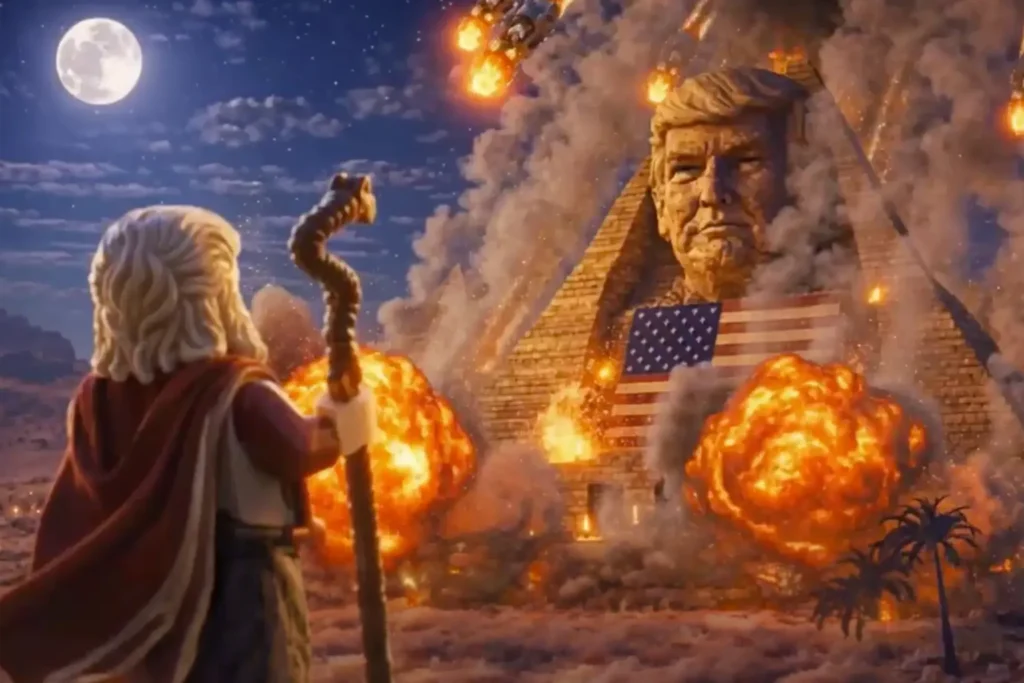
The conflict between the United States and Iran has extended past the physical battlefield and into the digital realm. Iran has adopted tactics similar to those coming out of Washington: total disrespect for their adversary, pointing out every flaw and hypocritical action, and mocking the “American Way.”
One commenter on YouTube responded, “Crazy part is that they aren’t even lying.”
In the widely circulated song “L.I.A.R.,” Trump is explicitly the target.
“We coming for your head/ We coming for your heart.”
In another bar, “Stealing from your own people making them bleed/ Taking tax dollars just to fund your own greed.”
The punches and insults feel playful because of the LEGOs, but these aren’t Saturday morning cartoons. These are AI-generated war propaganda videos, built for the feed. AKA: Slopaganda.
It started in 2025, when the White House posted footage of a missile detonation spliced with SpongeBob SquarePants, and another titled “Strike,” representing the Iranian officials as bowling pins. A montage called “Justice the American Way” mixed clips from Top Gun and Tropic Thunder. Later on, Mr. Trump posted an AI-Generated video of himself wearing a crown while flying a jet and dumping feces on protestors. For him, slopaganda is everyday business.
Before AI, Iranian propaganda videos were outdated, somber, and stiff. The LEGO-style clips, created by an Iranian media company known as Explosive Media, have marked a radical shift in strategy. The fast-paced humor, rap music, and Western meme references have captured millions of clicks and shares.
“Digital war silent and fast/ Your global power is a thing of the past.” (L.I.A.R.)
If you grew up on hip hop, you can perceive the mechanics almost immediately.
The wordplay. (Subverting political slogans.)
The angles. (Framing the US president as a puppet of external interests.)
“They ordered you to die for Israel.”
The punchlines. (Targeting personal insecurities.)
“You talk real big for a man with small hands.”
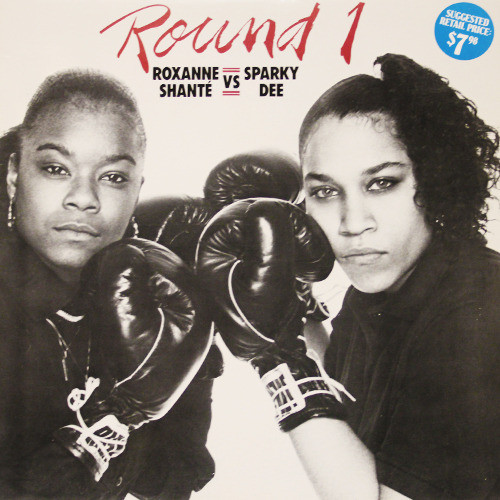
Watching these AI clips can leave you thinking more about battle rap than world politics. Hip hop has long turned conflict and struggles into performance. Feuds like Common vs. Ice Cube, Canibus vs. LL Cool J, Nas vs. Jay-Z, and many more turned grievances into records. Clashes between old-school legends and rising stars were defining moments in Hip Hop history. The Roxanne Wars and The Bridge Wars were examples of how battles had evolved from raw freestyles over bragging rights and neighborhood pride to wars on wax.
Fast forward two decades, while battle rap evolved into a multi-million-dollar industry, with Eminem linking the underground and the mainstream, its core characteristics remained the same: structured rounds, rebuttals, and freestyling over beats.
In the early 2000’s, battles transitioned to an acapella format. Battlers now use prepared written rhymes (after researching their opponent). The real seismic shift came when the culture moved from DVDs to the internet. That meant a worldwide audience and a fresh, click-powered environment.
This competitive form of rap, which originated in park jams and grew into battle leagues like URL, Grindtime, and KOTD has now transformed into a phenomenon akin to professional sporting events. Aside from a few scuffles and intense moments, the sport of rap remains fundamentally non-violent.
Live battles like Dizaster vs. Canibus show how verbal bouts can become the closest thing to watching a public execution with words. In the lyrical battlefield, wit and wordplay don’t belong to the person with the most record deals; anybody can strike a fatal blow.
Some of the most-viewed battles have been nationalistic showdowns that lean heavily into wrestling-type storylines. Dizaster versus Oxxxymiron carried Cold War undertones: America vs. Russia, East vs.West, refracted through rap bars.
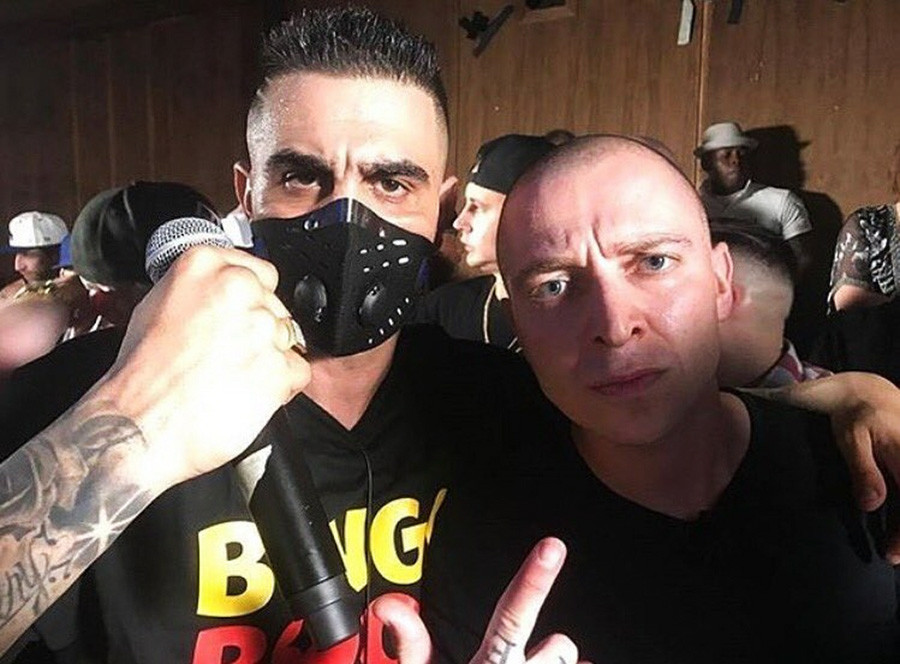
“Oh, wait, wait, you mad, cause I’m Joseph Stalin on you,” by Oxxxy made the crowd roar. At the end of the battle, they dapped, and later Dizaster praised Oxxxymiron’s ability and stamina, as he was rapping in his third language.
What connects these matches is an unwritten social contract- a convention. Say almost anything, display mastery of lyricism, and shake hands at the end.
That is what makes these new AI-generated LEGO clips so strange.
Their creators seem fluent in getting clicks by drawing on aspects of battle culture. They understand boasting, clowning, name flips, chantable hooks, and personal angles.
In an interview with CNN, one creator from Explosive Media said, “We know that the West has a bad perception of us. They don’t know us at all. We wanted to break down this wall of censorship. We want to say that we are funny, funnier than you even.”
But unlike a rap battle, at the end of these videos, nobody gives a handshake. These slopoganda videos borrow the language of rap battles while boasting about the real thing.
Henry Giroux from McMaster University called the visual celebration of lethal force “obscene” and “utterly immoral,” noting that it causes victims to “vanish from moral consideration.” Not to mention, the AI component constantly blurs the boundaries of truth, making everything feel “not believable” and soulless.
In the Bronx of the early 1970s, where gangs fought over territory and reputation, organizers and future cultural leaders sought truces and constructive outlets to air feuds, helping to redirect street energy into music, dance, art, and symbolic competition.
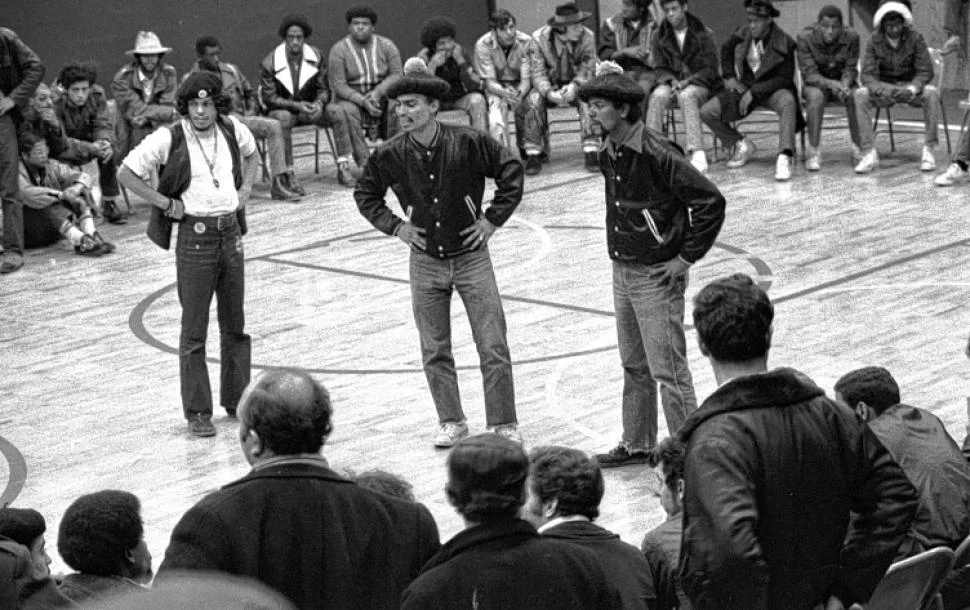
Battles were central from the beginning. Rap, dance, turntablism, and graffiti were ways to settle disputes. You had beef? Battle it out- with skills.
While the Lego clips capitalize on hip-hop’s narrative tools, they don’t narrate that the original impulse was not war. Hip Hop was born from the struggles of poor Black and Latino youth, the descendants of the trans-Atlantic slave trade, and children of displaced immigrants who were seeking dignity, peace, and respect in a hostile environment. Music and self-expression were about surviving inequalities, or as B-boy Popmaster Fabel from the legendary Rock Steady Crew puts it, “People who grow up in an oppressive type of society are always looking for medicine.“
These AI-generated propaganda videos flip the script on the old conventions.
The ritual of battling relies on words to replace violence. The LEGO videos use words to adorn violence, to justify it, and make violence feel shareable and clickable.
Battle rap understands this “arms vs. letters” distinction. In the LA battle with Dizaster, Oxxxymiron paused to note that real war kills while a rap battle only insults.
The LEGO diss tracks abandon that contract. For example, in “L.O.S.E.R.,” which collected millions of clicks, the bars are structured like crowd-pleasers: taunts, boasts, ridicule, chantable hooks.
“Sacred defense, we protect the soil/ You sacrifice soldiers to pay for your spoil.”
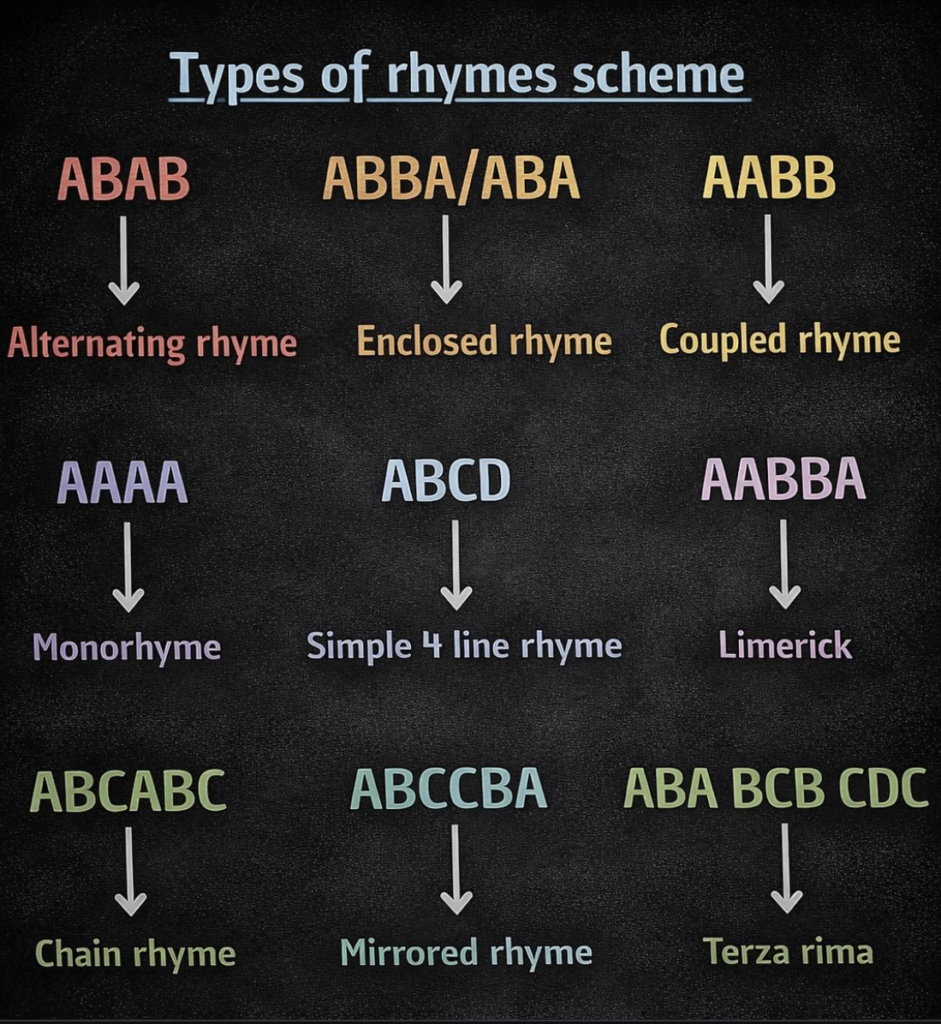
In another era, they might have won over the crowd. Today, professional battle rappers are known for multisyllabic rhymes, internal rhymes, and intricate wordplay. These videos are intended for political satire and information warfare and use a basic AABB or AAAA rhyme scheme.
While seemingly simplistic and monotonous, the one and two-syllable nursery rhyme style is easy to remember and has become the soundtrack of retaliation.
“You thought you ran the globe sitting on your throne/ Now, we’re turning every base into a bed of stone.”
That shift matters. A form once celebrated for turning conflict into performance is now being used to make real-life conflict feel entertaining.
The impact lies in the packaging. LEGOs appeal to childlike innocence, provide a universal visual vocabulary, are unlikely to offend, and therefore, are less likely to be taken down from the internet.
The secret sauce, rap, has helped the messaging resonate with global youth. For decades, state propaganda was easy to ignore, but the new videos, by trying to soften the brutalities of war, have created an endless supply of clicks. Ironically, generative AI, which relies on large datasets, has likely drawn from online rap battles and Hip Hop culture as source material. An absurd possibility follows: a plastic minifigure with bars may now shape more opinion online than a formal press conference or debate.
Hip hop music, once rooted in resistance, is now universally legible enough to be used by governments, dissidents, brands, media operations, and algorithms alike. Anyone can borrow the kicks and snares. Not everyone inherits the values.
While many Islamic and pre-Islamic musical traditions have contributed to Iran’s national identity, the now deceased Ayatollah Khomeini once announced, “Music is like a drug… We must eliminate music because it means betraying our country and youth.” (Rastovac)
Since the 1979 revolution, Iranian public life and cultural activities have been restricted or banned. Musicians needed permission from the Ministry of Culture to perform, produce, or distribute any type of music, thereby laying the social conditions for underground movements.
In the paper “Emergent Culture,” the author, Morvarid Ranjbar, argues that Iranian rap music cannot be understood in isolation from Iran’s social and political context, emphasizing that we must view it as a “cultural product embedded in all aspects of society.” Unlike in the US, Iranian hip hop emerged from the privileged classes, who had access to the internet and traveled. In the South Bronx, hip hop’s birthplace, it was a different story; it emerged out of urban neglect and poverty. In essence, though, both were means of expressing a response to government oppression and a statement of resistance.
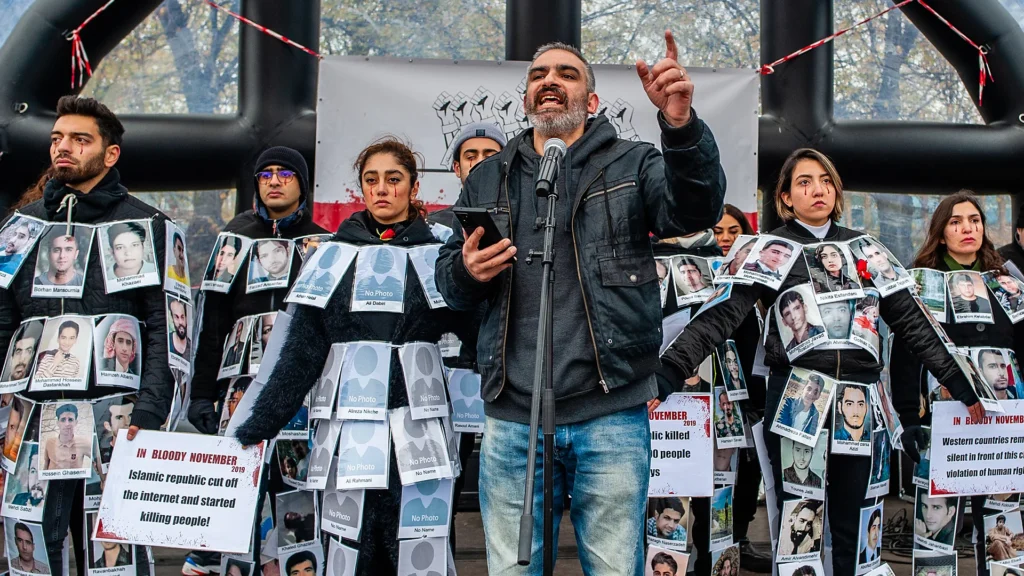
Hichkas, a pioneer of Iranian rap, paved the way for the underground movement with socially conscious lyrics that documented life in Tehran. Other artists operate in a gray zone, not fully state-approved but not underground either. Artists like Yas, a rapper influenced by US hip-hop and Persian poetry, walk a tightrope between addressing issues of inequality and operating under constraints and government scrutiny.
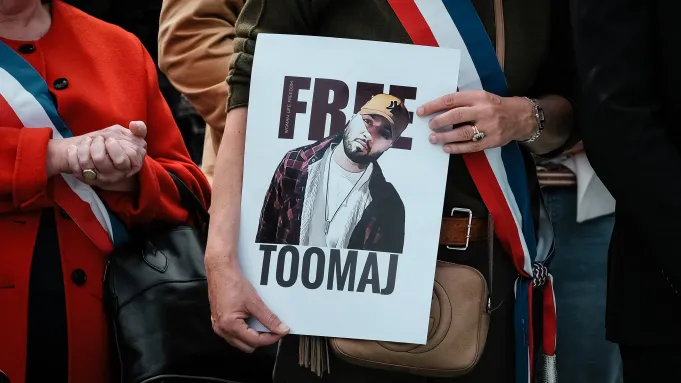
While state-linked media now borrows a page from hip hop’s rhyme book, the contradiction in Iran is difficult to miss. Independent rappers who criticize authority have faced censorship, imprisonment, or worse. In 2022, the rapper Toomaj Salehi became internationally known after he was arrested for supporting nationwide protests and critiquing the Iranian regime with his lyrics. In 2024, he was sentenced to death for “corruption on earth,” which was later overturned thanks to public outrage and appeals, but today, his whereabouts remain unknown.
Other rappers have faced similar consequences. Amir Tataloo, one of Iran’s most famous and controversial rappers and singers, known for his full-body tattoos and open political opinions, was repeatedly arrested, charged with blasphemy, and sentenced to death in May 2025.
When the state raps, it is a strategy. When the people rap, it can become sedition. Which suggests the issue was never the music itself. It was always who gets to hold the microphone, and toward what end. That tension says as much about power as it does about hip hop. Governments may imitate the aesthetics of rebellion, but they rarely welcome it.
Hip-hop asks for something more complex than absolute obedience. It asks for virtuosity, testimony, authenticity, nerve, rebellion, and love. It turns deep pain into language and conflict into an artistic form. It lets people speak before they are spoken for.
The culture and conditions in Tehran may be starkly different from those in the U.S, but hip hop is our shared language. As both nations trade insults and wage war through AI-generated propaganda, in reality, the citizens have more in common than not.
Tupac, one of Toomaj Salehi’s favorite rappers, said it most memorably in “Keep Ya Head Up”, “You know it’s funny, when it rains it pours/ They got money for wars, but can’t feed the poor.”
So, who wins the battle then?
Nobody.
The real question is: can we tell the difference between communication and manipulation, music and imitation, truth and slop?