
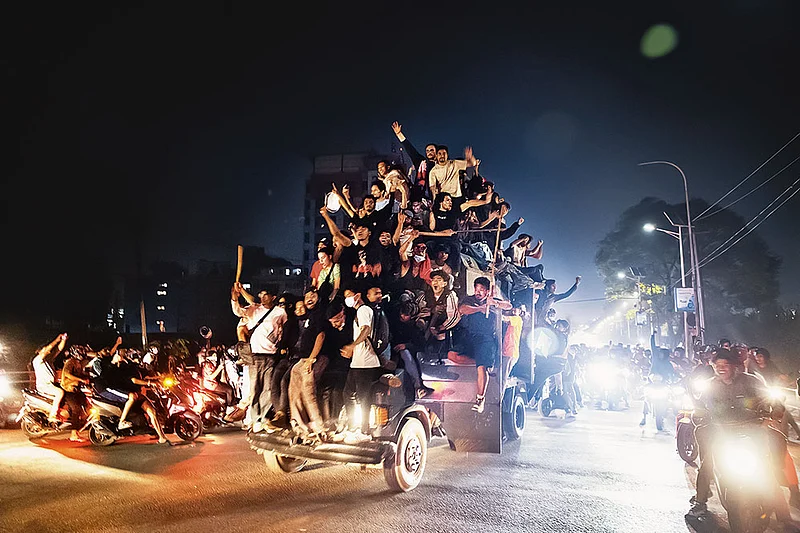
On September 8th, 2025, Gen-Z-led protests filled the streets of Nepal’s capital city, Kathmandu, and after days of tense clashes with police, they forced the Prime Minister’s resignation.
Nepal’s modern history has been defined by a decade-long civil war (1996-2006), followed by a series of popular movements that led to the adoption of a democratic republic constitution in 2015, the nation’s seventh constitution in the last 50 years. The recent Gen-Z demonstrations were initially triggered by a social media ban but fueled by years of anger and frustration with government corruption.
Nepali hip hop artists were a leading voice in this movement. Their rap battles, music videos, and cyphers garnered millions of views on YouTube, gaining worldwide popularity and giving voice to the pent-up frustrations that catalyzed the protests. Nep-Hop’s journey from a Western-imported subculture facing censorship to a defiant force that grew into a powerful movement, and is currently playing a role in politics, resembles a global phenomenon.
Hip Hop has long served as a powerful tool for marginalized people to express a wide range of emotions, while building community and advocating for peace and justice.
The lyrics from BDP’s 1988 song, “Illegal Business,” exposed those in power.
“The government’s like a customer / And they get the money, all of it / And then they let the drugs hit the street / And then they try to stop it, what a freakin’ hypocrite.”
While Slick Rick, the same year, advised the youth in “Hey, Young World.”
“Don’t ever stray / And always let your conscience lead the way.”
Nepal’s story shows how the forces of Hip Hop, the inherent tension between destruction and construction, protest and peacebuilding, are being channeled into the difficult work of building a just society. The voice of Hip Hop captured decades of Nepali discontent and disillusionment with a corrupt system, as exemplified in “Balidan” (2019) by Balen Shah:
“All who protect the nation are fools / Leaders, all thieves, looting the jewel.”
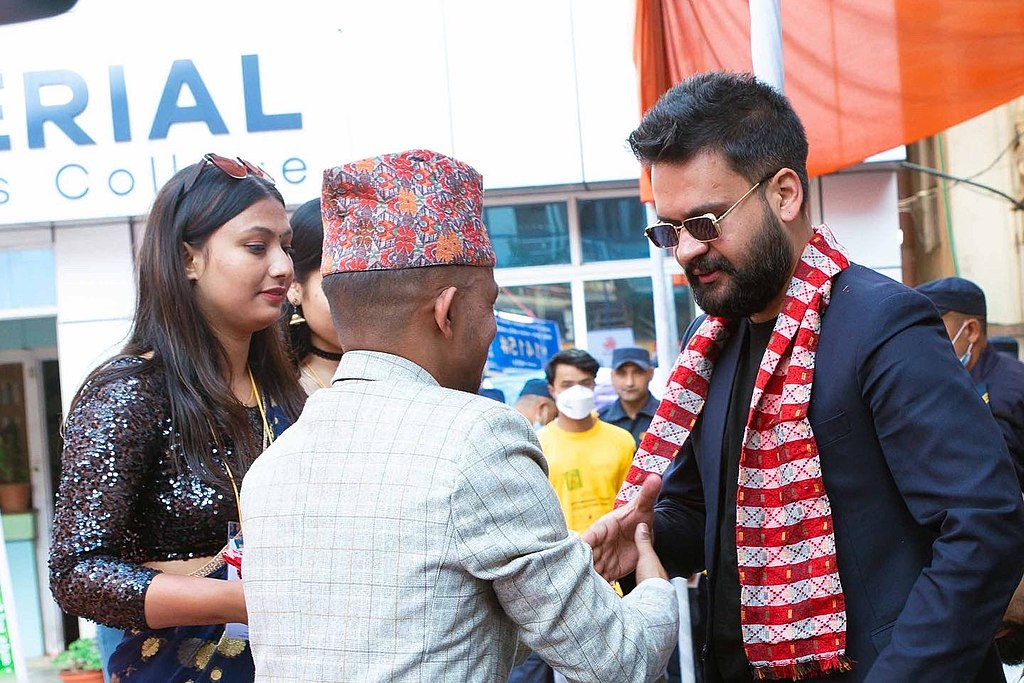
Inspired by Tupac, Shah developed a love for rap from a young age and rose to prominence in the Nepali battle rap scene thanks to his sharp verses and freestyling skills. His style caught on, and struck a chord with the youth. In 2022, he ran as an independent candidate for Mayor of Kathmandu and won the election. His campaign focused on practical solutions to urban problems, leveraging his background in civil engineering to create a “well-planned city.”
His success has paved the way for other young people to get involved in politics and helped change the general society’s perception of Hip Hop. Gen Z respects Balen Shah and is one of the few politicians who were not forced to resign during the uprising. He expressed his “full support” for the protestors early on through social media posts:
“Tell me, Gen Z, what kind of country do you want to see?”
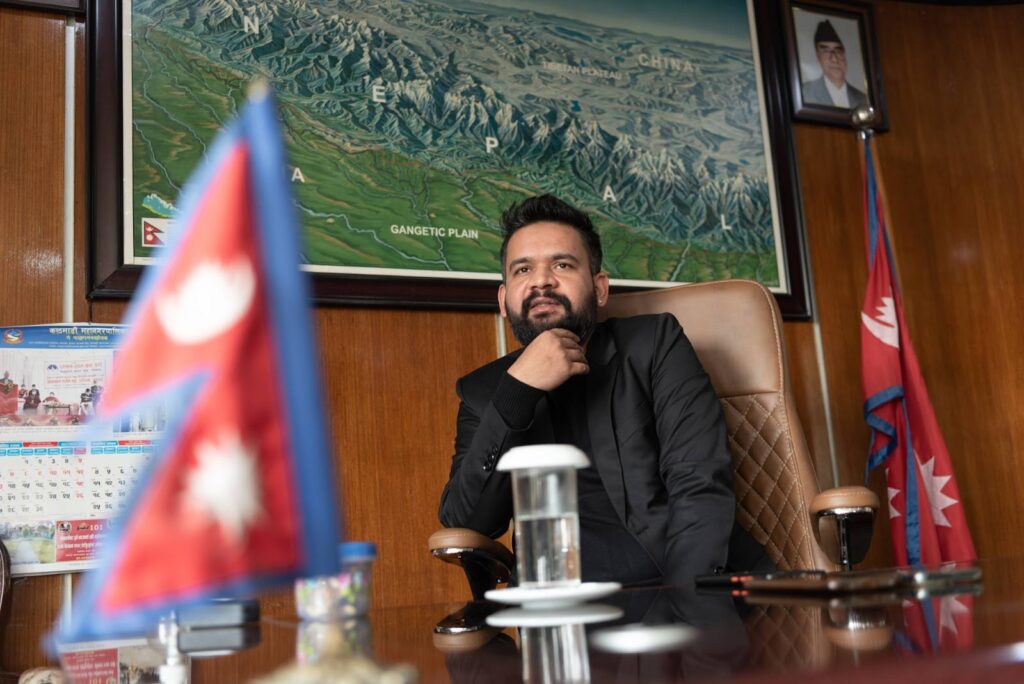
And in the wake of the new government, he encouraged Gen Z to harness their energy for the long work ahead.
“This is like reaching the base camp of Everest. The real climb is to turn street voices into political and institutional power.”
Nep-Hop’s first known recorded song, “Meaningless Rap” by Girish-Pranilah, released in 1994, reflects how rapping seemed meaningless to him as a young artist trying to understand English Hip Hop culture. While the music grew in popularity and strived to find a distinct sound beyond imitation, the genre was still seen as “alien” and “vulgar” by Nepal’s conservative society.
The scene struggled for acceptance but continued to evolve as an underground movement, finding new audiences through social media, YouTube, and Spotify.
A pivotal moment in the growth of Nep-Hop occurred in the 2010s, when the late Yama Buddha started the rap battle league Raw Bars, reaching the Nepali diaspora worldwide and catapulting Nepali rappers like Balen Shah, Uniq Poet, Lil Buddha, and Laure into the mainstream.
Internet access has fueled the genre’s growth, allowing Nepali emcees to produce, promote, and distribute their music independently. It’s given them the freedom to discuss politics and build a community that transcends Nepal’s borders.
Yama Buddha, known for depicting the real problems faced by Nepalese society, has a song, “Saathi,” which has over 56 million views. By 2019, new artists like VTEN, emerging from the underground circuit, were regularly achieving millions of views.
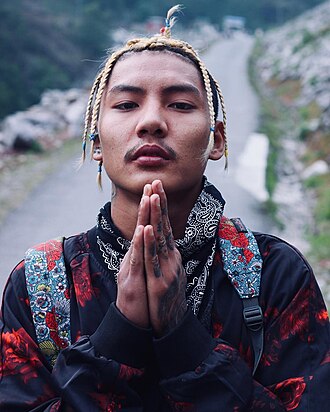
VTEN’s music, particularly the song “Churot,” became a youth anthem, using the metaphor of smoking to comment on the struggles of Nepalese youth with police harassment.
“You get arrested for smoking a cigarette; the whole country’s system is corrupted. Then he hit me, emptied my pockets, and took my money. When I looked back, he himself was lighting the cigarette.”
These lyrics drew the attention of the authorities. Soon after, VTEN was arrested for another song called “Hami Yestai Ta Ho Ni Bro,” which used vulgar language and critiqued the police. He was charged with “anti-social values” and “vulgarity” but was released the next day due to popular support. He was back on the police radar again in 2020 with the hit song “PARAA,” which challenged the authorities and featured a police car explosion.
When VTEN rhymed about police corruption, he was walking a path well-traveled by artists from around the world. Whether it’s a Kathmandu cop shaking down a citizen for a cigarette or an LAPD officer enforcing a racist stop, the feeling of systemic injustice is universal.
In American rapper Meechy Darko’s song “K.U.A.,” he rhymes,
“Jim Crow, segregation, crack houses, sit-ins / His ancestors with him, feel like I’m marching with millions”
Hip-hop reinforces the collective identity, whether through shared struggles or the pursuit of happiness and freedom. From Calle 13 in Puerto Rico, Booba in France, or El General in Tunisia, the microphone channels frustrations but also inspires listeners to envision a better life.
In his song “Mero Solta“(My Brother), the Nepali rapper Laure spits bars about a young man who joins the British army to lift his family out of poverty, but is killed in battle. This song honors those who put their lives on the line for others. It motivates young people to follow their dreams, and as the world witnessed on September 8th, to exhibit bravery by sacrificing their own bodies for a better country.
Back in 2020, Uniq Poet had already channeled the Gen Z movement’s ethos in his song “Mero Desh Birami” (My Country is Dying), lamenting the nation’s problems and a sense of lost future:
”Trying to find humanity in a land of evil / Corruption, rape, extortion everywhere / The art I do is labeled a manacing act. Hip Hop means the mirror of society. Stop rape, not our voices…”
Uniq Poet uses the song to express his frustration, but he also conveys a strong belief that the youth will make it better one day:
“Hip Hop means the voice of change. Be courageous, we shall change our nation by tomorrow.”
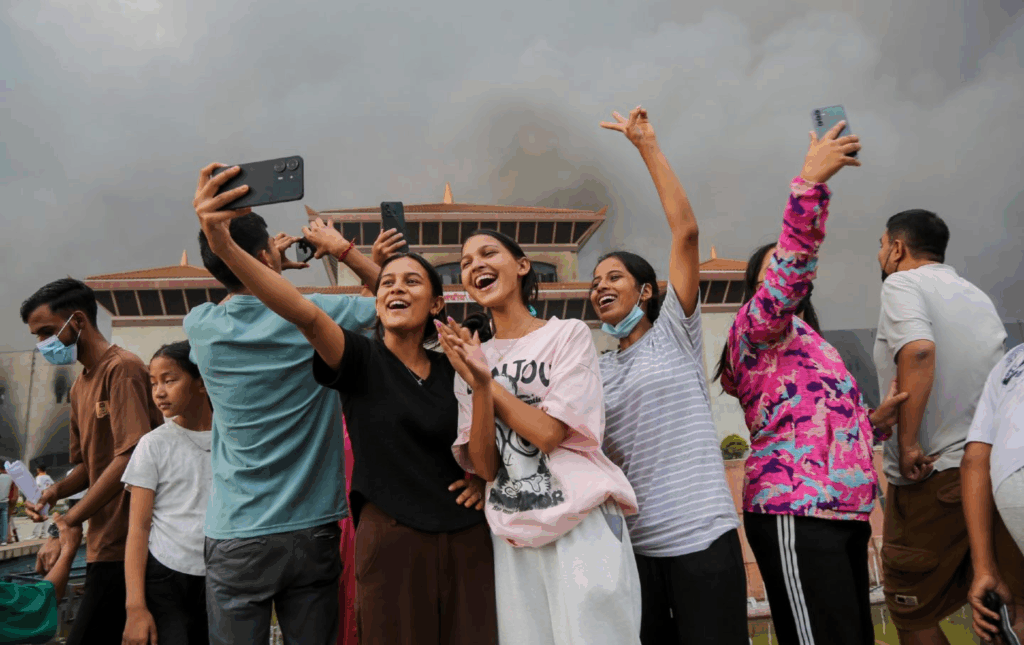
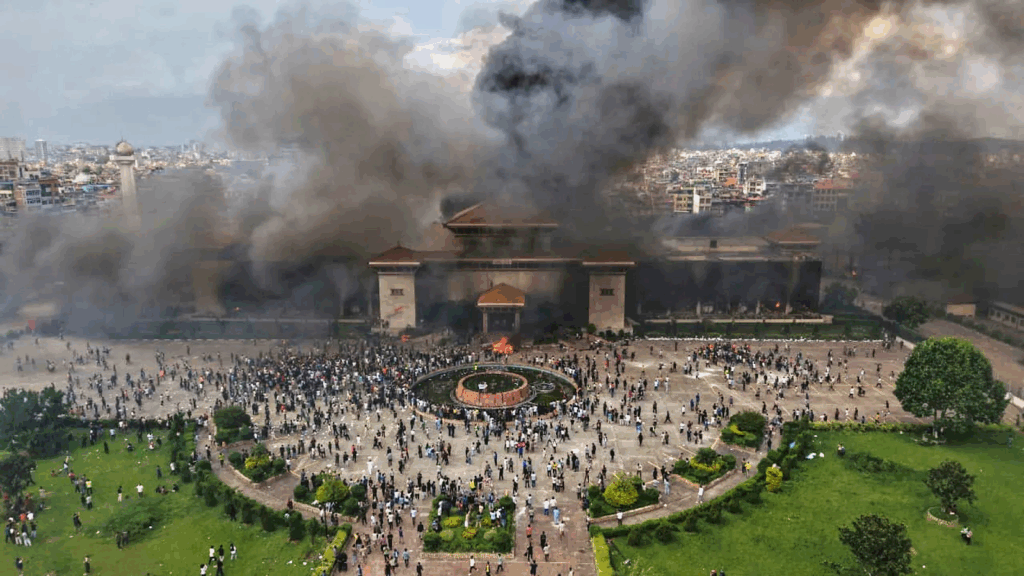
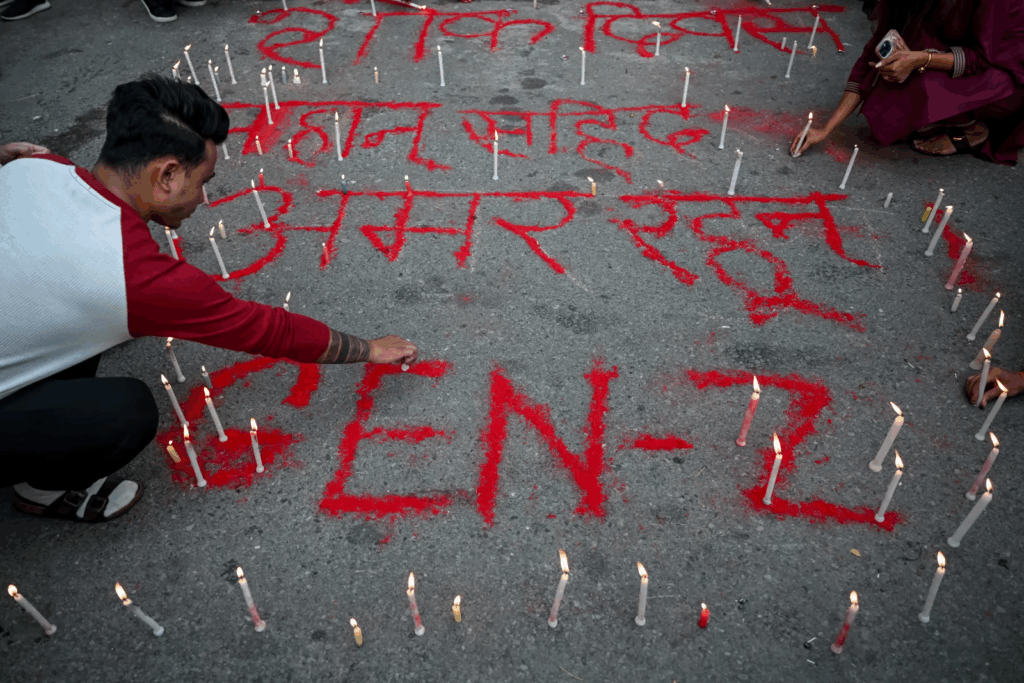
During the September uprising, police shot water cannons, tear gas, and live bullets into the crowds, killing protestors and unleashing chaos. Crowds stormed and set fire to the parliament building, home of the prime minister, marking a point of no return. Smoke and flames rose to the sky, and cars blazed in the streets as politicians ran from angry protestors chasing them with shoes and throwing stones.
Many officials called for calm and dialogue, but to fan the flames of the masses, it would take a rare politician who understood and represented the concerns of the Gen Z protestors, someone they trusted and engaged with authentically. Who could that be? Mayor Balen Shah.
An entire political class was targeted, including the headquarters of political parties, the homes of ministers and politicians, and the businesses of politically connected entrepreneurs. 112 police stations were scorched, and over 70 people died.
Mayor Shah addressed them directly, “Tell me, Gen Z, what kind of country do you want to see?”
Following the prime minister’s resignation, the Gen Z movement voted in an interim prime minister, Sushila Karki, the first woman to hold the role. During the transition, Mayor Shah wrote:
“Dear Gen Z, the resignation of your harassers in politics has already come! Now please be patient… You and we now need to be restrained! Now your generation will have to lead the country! Be prepared!”
Shah framed the moment as a turning point and a time for Nepal to take steps toward “a golden future,” and for a new generation to take the lead in rebuilding the nation, not destroying.
In a fragile phase, the country looks to other young leaders, such as Sudan Gurung, a former DJ and a key figure in the grassroots movement, who, through the Discord channel “Youths Against Corruption,” organized and unified protesters.
“This is our first time building a country,” he said in an interview with journalist Sandra Gathmann. ”We don’t have the experience; we just have the love for our nation. We are still learning, and still trying to improve.”
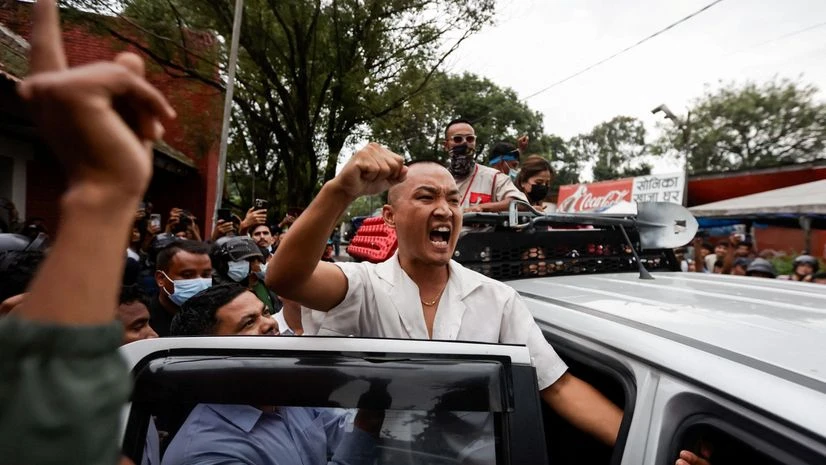
As Gen Z prepares to win the March elections, Gurung has doubled down on his commitment to change in Nepal, saying, “We will not stop fighting.”
For some Gen Z protestors, the fight is now helping to clean up the streets and leading efforts to recover looted goods for shopkeepers. “Some people started looting in the name of Gen Z,” said one young protestor, “This was very shameful for us, and we thought we should stop this.”
The evolution of Nep-Hop has progressed from an American import to an outlet for change and continues to mature. As the world awaits the next chapter in Nepal’s history, artists like OMG Spark strive to fuse traditional folk music with hip-hop sounds. The creation of new record labels, such as Skathi Entertainment, has led to initiatives that aim to build new support systems, including the all-female Hip Hop festival “God Is A Woman,” designed to empower the next generation of artists.
Similar to Hip Hop’s roots in the U.S., Nep-Hop demonstrated that Hip Hop can be integrated into activism and be more than just a soundtrack for a movement. While much highly commercialized U.S. Hip hop music tends to prioritize financial success, which is, by all means important, perhaps the youth can also borrow a page from Nepal’s blueprint and repurpose the energy towards more community building, peaceful mobilizations, and hopefully, even some resignations.
References:
Khandekar, Omkar, and Yam Kumari Kandel. “How Gen Z-led Protests Put Nepal’s 1st Female Prime Minister in Power.” NPR, 20 Sept. 2025, www.npr.org/2025/09/20/[article-url-path].
Ahmed, Aftab, and Hritam Mukherjee. “Exclusive: Young Activists Who Toppled Nepal’s Government Now Picking New Leaders.” Reuters, 14 Sept. 2025, www.reuters.com/world/asia-pacific/exclusive-young-activists-who-toppled-nepals-government-now-picking-new-2025-09-14/.
Lundqvist, M. (2020). Nep-Hop for peace? Political visions and divisions in the booming Nepalese Hip Hop scene. International Journal of Cultural Studies, 24(3), 454-469. https://doi.org/10.1177/1367877920978658 (Original work published 2021)
Das, Krishna N., et al. “Nepali Rapper Turned Mayor Is Young People’s Favourite in Political Crisis.” Reuters, 10 Sept. 2025, www.reuters.com/world/asia-pacific/nepali-rapper-turned-mayor-is-young-peoples-favourite-political-crisis-2025-09-10/.
Menge, Jonathan, and Deepika Dhakal. “Kathmandu’s Rapper Revolution.” Future Hub, Friedrich-Ebert-Stiftung, 2022.
Liotta, Edoardo. “Nepalese Rapper VTEN Just Got Arrested for One of His Songs.” Vice, 25 Oct. 2019https://www.vice.com/en/article/nepalese-rapper-vten-arrested-song-lyrics/
Balen. “Balidan.”YouTube, uploaded by Balen, [Date Uploaded e.g., 15 Oct. 2022], youtu.be/VZfKqojCmeg.
Beech, Hannah. “‘We Are in a Zero State’: Scenes From the Ashes of Nepal’s Capital.” The New York Times, 17 Sept. 2025, www.nytimes.com/2025/09/17/world/asia/nepal-earthquake-kathmandu.html.