Saturday, April 4, 2026
Home Blog

Rubble Kingz: How Camps Breakerz use dance for healing in the Gaza Strip

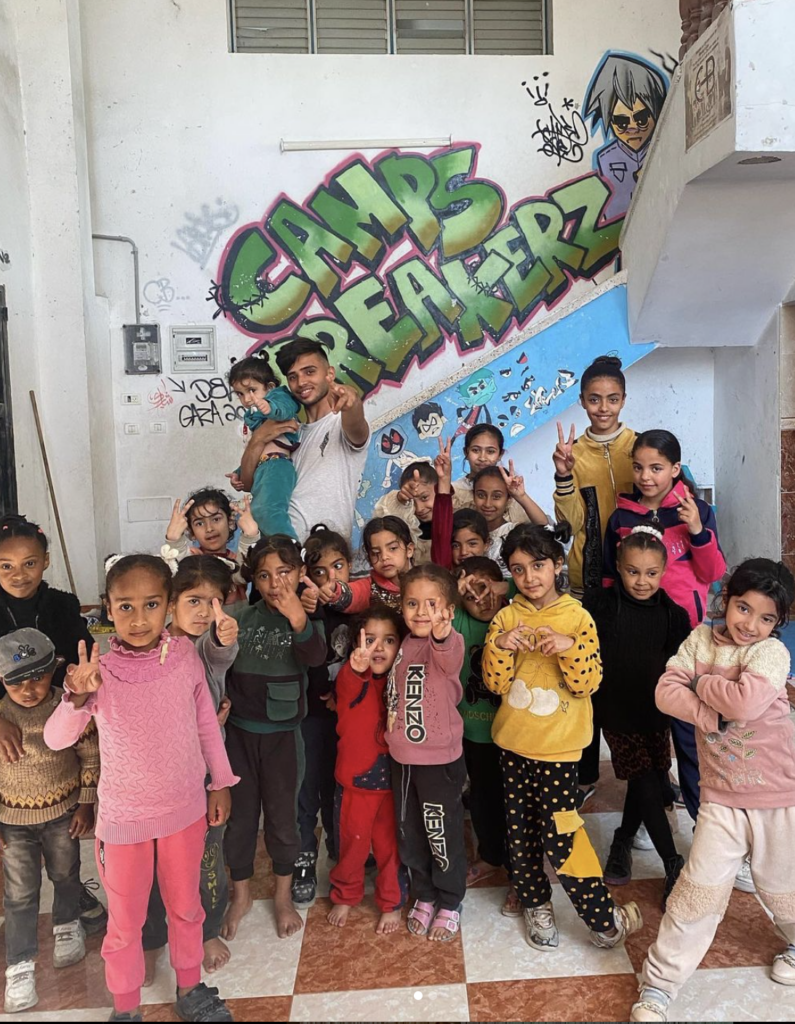
Instructor, Mouse Alghariz poses with students in the Camps Breakerz studio.

To begin simply, Camps Breakerz is a crew of b-boys and b-girls. Like so many other crews in Hip Hop Culture, they throw jams and battle. They clap and cheer for each others’ finesse and power moves and they dust each other off when they crash. They get up for morning sessions,  and crack jokes and tell stories after late night practices. They’ve carved a lane teaching the art of breaking to youth in their community, like many other Hip Hop heads who have found greater purpose in passing along their craft to a younger generation. Also not unlike many other teaching artists, they’ve found unexpected magic in the educational programs they facilitate. For the children and adults that they work with in their home of the Gaza Strip, Camps Breakerz’ programs have not only benefited the physical health of their students, but they have created outlets for self-expression and trauma-release in a space where that type of healing is desperately needed. 

Following an attack in southern Israel carried out by Hamas on October 7, which killed 1,139 people and captured 253 hostages, the Israeli government began a catastrophic siege on the population of the Gaza Strip that at the time of this writing, has killed over 35,000 people in Gaza. According to Gaza’s Health Ministry (MOH), 14,000  of those deaths are children and 9,000 are women. Upwards of 10,000 people are presumed still trapped under rubble created by persistent bombings. Widespread acts of violence directed at hospitals and other obstructions of access to health care have been recorded in Gaza since the current phase of crisis in Palestine began. The MOH also reports that 493 health workers have been killed in the attacks. Roughly 12 of the 36 hospitals in Gaza are in a state of partial functionality. The other 24 hospitals have either completely shuttered or have run out of fuel and medicine. To compound the crisis, shipments of medical supplies and food aid have been repeatedly blocked or attacked directly. Tragedies like the bombing and killing of an entourage of international aid workers from the World Central Kitchen in April 2024, serve as a deterrent for others who would help deliver essential support to the citizens of Gaza.

Survival Pending Revolution

In all mass movements, there are various tiers of resistance that can be observed in regards to addressing oppression, hegemony, and in the most dire of situations, genocide. Some of these actions are undertaken in attempts to fight the long game of addressing the roots of the socio-political constructs that fuel the suffering of a population. These actions of long-term impact can be found in the form of education, massive political restructuring, reworking of media narratives, and in more extreme scenarios, complete revolution. Other actions are more immediate in nature, working towards accessing the basic needs of survival for people living within the shadow of repressive institutions.

Black Panther Party co-founder, Huey P. Newton explained this phenomenon with the simple phrase, “survival pending revolution.” In an essay re-published in the anthology, To Die for the People: The Writings of Huey P. Newton, he wrote:

“We recognized that in order to bring the people to the level of consciousness where they would seize the time, it would be necessary to serve their interests in survival by developing programs which would help them to meet their daily needs… These programs satisfy the deep needs of the community but they are not solutions to our problem. That is why we call them survival programs, meaning survival pending revolution.”
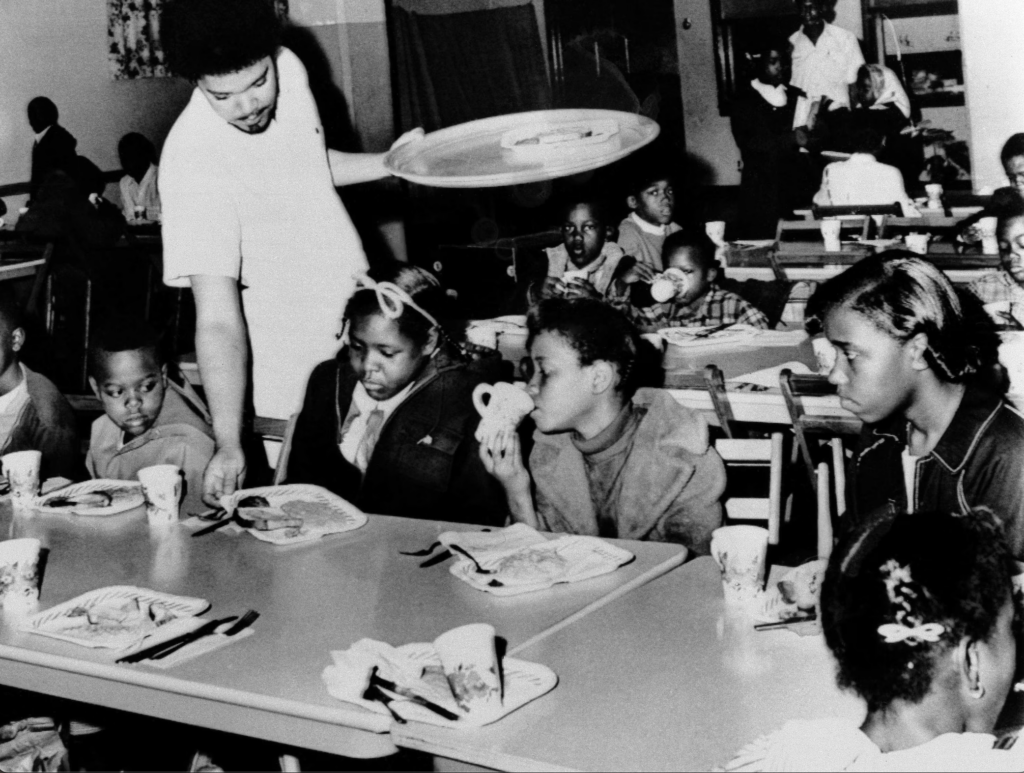
Bill Whitfield of the Black Panther chapter in Kansas City serves free breakfast to children before they go to school, April 16, 1969. (PHOTOGRAPH BY WILLIAM P. STRAETER, AP)

Survival programs are a unique lens that resistance organizing can be viewed through. Not only do these acts of community shed a soft light on the common needs of human populations and the ingenuity of those dedicated to social progress, they also draw to the surface the nature of everyday life that continues despite people facing the horrors of war, colonialism, and institutional racism. The Black Panthers formed a health-education curriculum, free medical clinics, Sickle Cell Anemia research projects, and free breakfast programs for school children as part of their agenda to address the short term needs of their communities, while preparing for the long walk towards permanent social change.

In a 2021 interview, the South African organizer and emcee Emile YX? was asked what it was like to be an activist living under the Apartheid regime in the 1980s. His response was telling. “The reality of being under the control of that type of regime is that life goes on. A lot of people ask ‘what were you doing?’ and you’re like, I was skateboarding, and roller skating, and playing football, and soccer, and volleyball, and practicing Kung-fu and they’re like, ‘Wait a minute, I thought this was during apartheid.’ People forget that apartheid is just an extension of colonialism. So, people lived under the regime. They fell in love, they went clubbing, they went to watch movies and so there was life.”

Emile’s point speaks directly to the needs of everyday people embroiled in those long fights towards full liberation. It highlights the power of finding solace in the ability to carry on a life and pursue the stability and mental health needed to bolster larger actions. It reminds us of the need for intentional actions to maintain a true and rich survival, and what it means for that survival to be an act of resistance.

Needless to say, the situation for the civilians of the Gaza Strip is dire and even basic survival is not something that anyone living in the region can take for granted. As human rights movements mobilize globally in attempts to secure aid and advocate for a permanent ceasefire, everyday citizens of Palestine are existing in a daily struggle for their lives. Much has been written about the long-form systems of supporting the population of Gaza and other people around the world who face the existential threats of state sponsored violence, oppression, colonialism, and war. The story of Camps Breakerz allows us to take a deeper look into the immediate needs of a people and how the very act of dancing can play a pivotal role in the pursuit of freedom.

Dancing in the Rain
B-Boy Funk

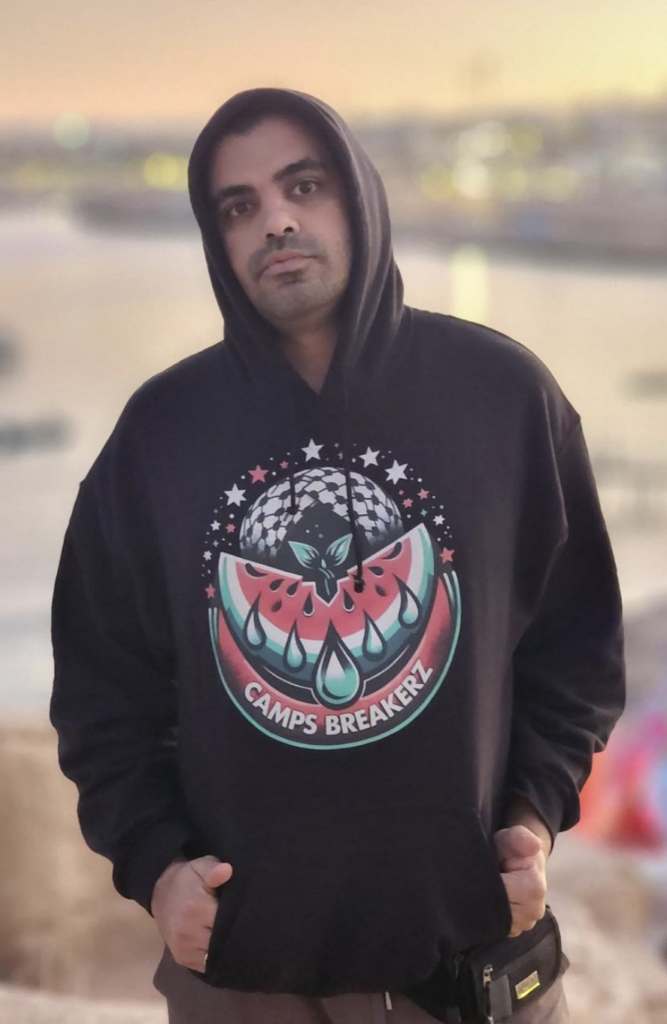
Before the Camps Breakerz crew was a symbol of resistance and community support, they represented a foundational moment in Hip Hop history. Original crew member, Ahmed Alghariz aka B-boy Shark tells the story of the group’s origins. “Our beginning was through my brother Mohammed, or Funk, the first b-boy… in Palestine. He started by watching some videos in Saudi Arabia before he moved to the Gaza Strip for his studies at university.” 

The Alghariz brothers come from a Palestinian family and were born in Saudi Arabia. Shortly after Funk moved back to Palestine for his studies, Shark followed. “My brother didn’t find anything called breaking or (what we called) “funky” (in Palestine) at that time. He started to practice and teach our neighbor and, step by step, they spread dancing in the area. When I moved with my family… to the Gaza Strip in 2003-2004, (Funk and I) made our crew together and we called it Camps B-Boys, but at the time we thought in the future we might get girls, so we called ourselves Camps Breakers.”

Many organizers within Hip Hop and other youth-based movements can relate to the struggle of establishing the legitimacy of new forms of cultural expression in the eyes of elders and other community members. Shark continues, “And we were so careful what we called ourselves also because the community might think that b-boys meant bad boys and we didn’t want this to be threatening or (appear to) be like the bad guys… because we are educated people and that’s why we converted b-boys to breakers. We were defending breaking and also spreading it in the Gaza Strip. People didn’t accept our shows because it was pure breaking. And in that time, we were thinking of a solution for how we can make our community accept our dancing. So we mixed our issues, our hard situation, into our shows and… people started to see themselves and their stories (in the events) and accepted our dancing. We call it Gazan Contemporary style.”
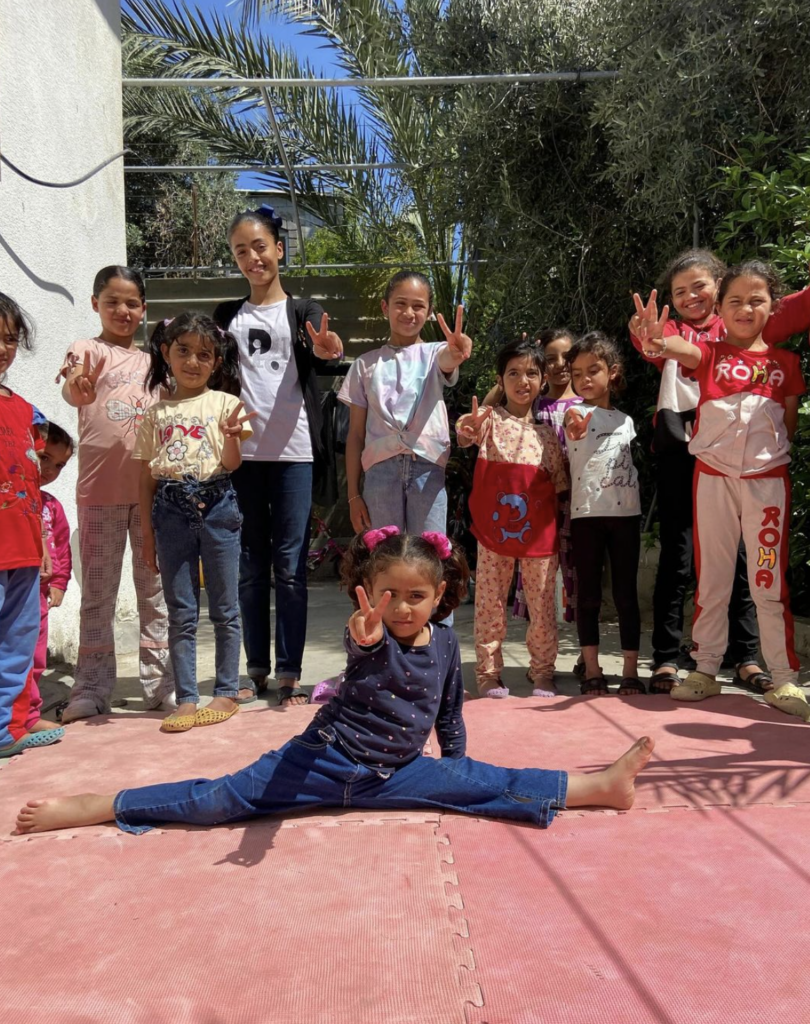
Camps Breakerz students in Gaza.

It is said that necessity is the mother of invention, and so what began with the Camps Breakerz crew’s excitement about the dynamic new culture of Hip Hop and a love for the element of breaking, created a need for including the interests and values of the broader community of Gaza into the way their events were run. The people’s response became a proof of concept for the power of using art and movement as tools for healing. 

Shark, who is a trauma counselor by trade, recognized that in his formal counseling work, while the methods for tracking and identifying the trauma that impacted patients were different than working with students in a dance studio, many of the results were the same. He and Funk found that moving together in rhythm influenced a sense of belonging, affirming their existence and connection to a pulse that bound Gaza to the rest of the world. They found growth in their students’ ability to communicate and cooperate, skills as essential in the general moments of everyday life as they are in the process of surviving a war zone.
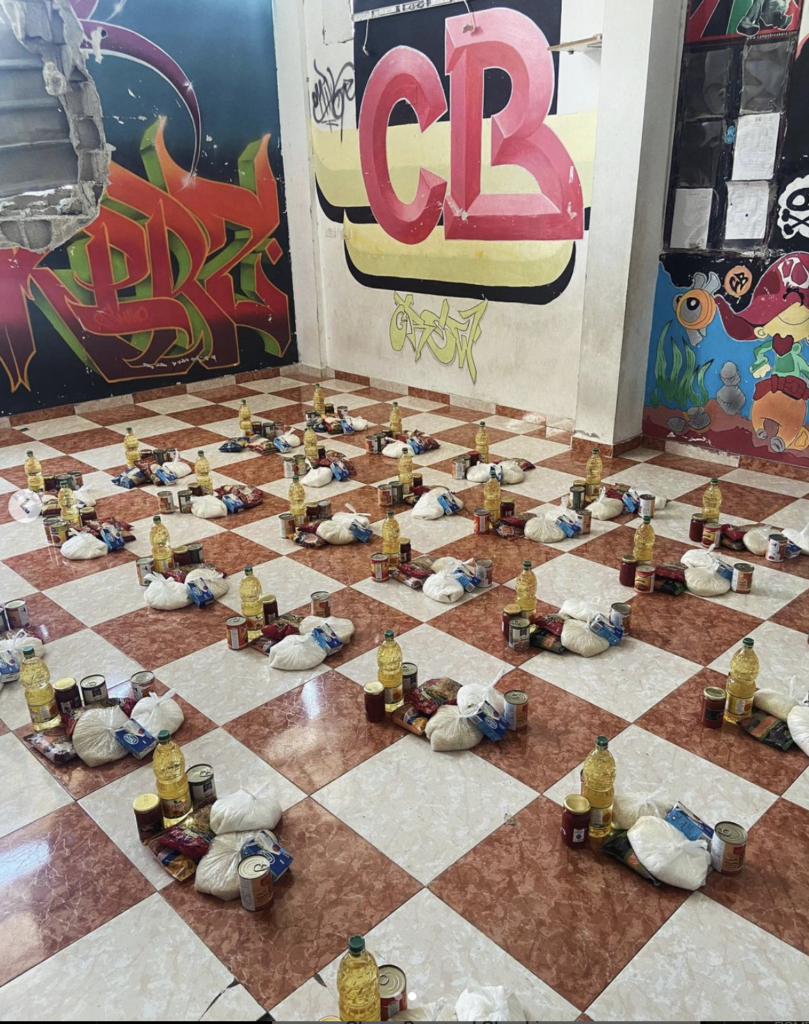
Food is packaged in the Camps Breakerz studio and prepared for distribution to residents of the Nuseirat refugee camp.

The crew grew to include new breakers like b-boys Jarule, Machine, Hanson, and more as well as videographers, promoters, graffiti writers, and a host of community volunteers. As the crew grew, so did the needs of Gaza. The Camps Breakerz studio became a hub for food and clothes distribution, a need further exacerbated by the current attacks on Gaza. They set up a busing program that brought youth in from surrounding areas to spend time in focused rehabilitation programs. The studio became a ray of sun in dark times, a space that could be found full of laughing children, cheering adults encouraging students to hug themselves, piles of shoes, jackets, hats, or bags of vegetables for people from the neighborhood to take. But even a ray of sunlight is subject to the movement of clouds.

In 2009, the Camps Breakerz studio was bombed by the Israeli military. Without a permanent physical space to organize, the crew literally danced on rubble, unwilling to end their work. They continued to organize and network, taking their instruction mobile, traveling to teach at various United Nations schools in the Gaza Strip. The network they had built became a powerful asset and through a collective fundraising effort, the group was eventually able to open a new physical studio inside of the Nuseirat Refugee Camp in central Gaza.

Increasingly dire conditions brought on by air raids and ground attacks by the Israeli military, have left a staggering amount of civilians’ homes and businesses in the Gaza Strip leveled. As a result, more and more people in Palestine have been forced into camps like the Nuseirat Camp. Nuseirat was built around the site of a former British prison to provide refuge for 16,000 Palestinians fleeing South Gaza during the mass displacements and violence of the period in 1948 in which the state of Israel was formally established, known in history books as the Arab-Israeli war but commonly referred to by the people of Palestine as the Nakba, or ‘catastrophe.’ Today, over 80,000 people crowd into the 0.26 square mile (0.68 sq km) camp.

Demolished businesses and scarce access to resources have left few opportunities for employment or commerce. Limited food is available to purchase with what income can be earned. Amid the cramped conditions, lack of materials to build shelter with, electricity cuts, and hunger exacerbated by fluctuating restrictions on fishing by the Israeli government, the struggling people of Nuseirat, along with local and international partners, have built their own infrastructure within the camp. In the quarter square mile it exists within, there are schools, a formal food distribution center, health centers, and a single maintenance and sanitation office. Despite these challenges, the Camps Breakerz erected their dance studio alongside those other general health and education support resources. 

Amongst the rattle of M4 rifles and the boom of mortar shells, kicks and snares echoed off the walls of the dwellings of Nuseirat. Laughter, joy, and possibility blended with mourning and fear as young students honed new skills and impressed their friends. Crowds from the community gathered on balconies and in the courtyard of the studio to marvel at headspins, barrels, and flares. As Emile YX? said, “So there was life.”
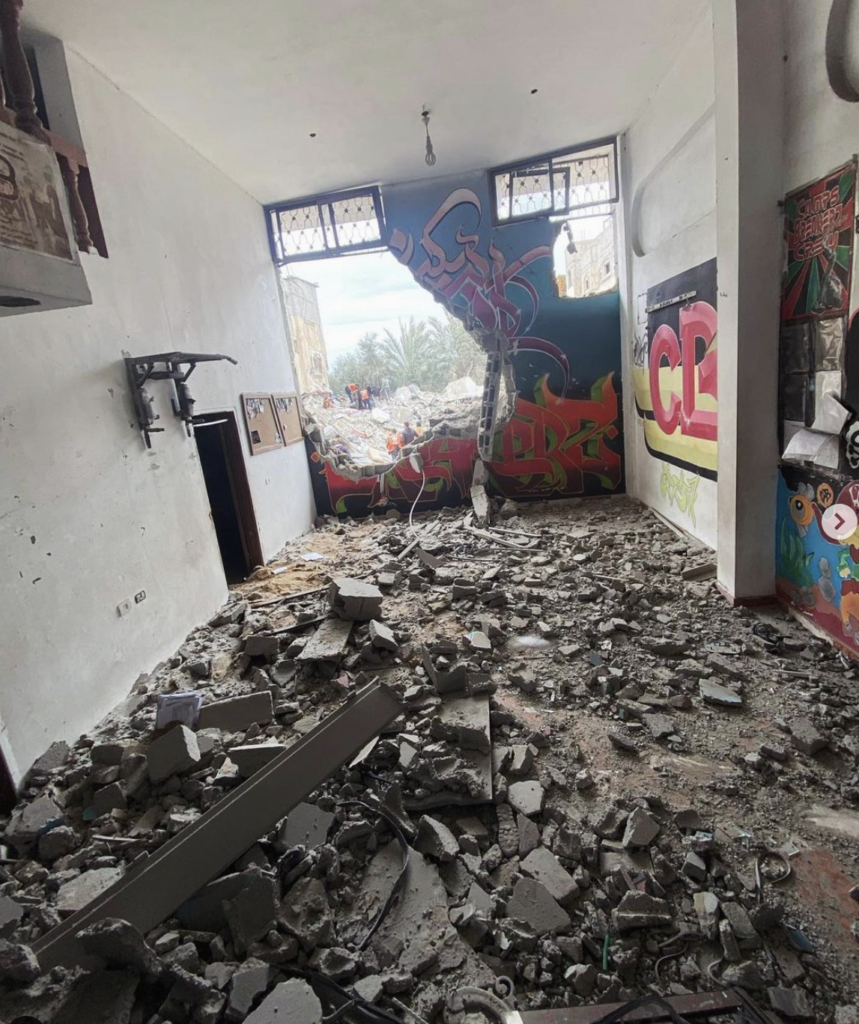
The Camps Breakerz studio after being bombed by the Israeli military on February 23, 2024.

Yet, the soil of the earth knows well that even rays of sun are subject to the clouds. In a heartbreaking return to the somber reality of living under the constant yoke of military violence, on February 23rd, 2024, the Israeli military bombed the new Camps Breakerz dance studio. Four students were killed, all children under 10 years old. The horror of those deaths and the chilling acknowledgement that the feeling of safety people find while dancing exists only in the mind of the dancer, would threaten anyone’s sense of resolve. Shaken but not broken, the Camps Breakerz crew danced on, sunlight continuing to shine on their students through a bombed hole in the wall, cut through a now crumbling graffiti mural.

Reflecting on the process of healing from a threat that still exists, Shark takes a deep breath before answering, “I have seen the results (of our work) and it’s going in the right direction, but of course we still need to be there. There are many reasons that trauma in Gaza is always refreshed and reactivated.” On the long road to permanent safety, a rich survival requires the response to harm and fear to recur as frequently as the violence. The Camps Breakerz organizers know that they won’t do this alone.

Young students dance under a demolished wall in the Camps Breakerz studio.

Leaning into the value of unity, one of the founding principles of Hip Hop that drew B-boys Funk and Shark towards the culture originally, the crew reached out to their global community, calling in b-girls, b-boys, and many other Hip Hop heads that they have collaborated with over the years. Breaking crews and Hip Hop organizers have begun throwing events from New York and Seattle to Barcelona, to help fundraise for the rebuilding of the Camps Breakerz studio. A Gofundme account was created to help draw more of the international community together to continue to raise funds for the studio.

The way Shark speaks about his own crew’s Gofundme campaign, further shows how collective of an effort community rebuilding can be. “We will build the school (with the funds we raise) and we have our campaign. Also we have our C.B. crew linktree account to support other campaigns for other people in the Gaza Strip who are in need to evacuate to Egypt, for example.” The linktree is full of stories of children, pregnant women, medical professionals, and grandparents that need help. Shark naturally blending the support needed for his own crew’s purposes with the needs of so many others is an almost poetic ode to the power of what each survivor can do while en route to liberation.

The civilians living in the Nuseirat refugee camp and the Gaza Strip continue to exist under constant threat to their lives. The struggle for access to food, fuel, medical supplies, and other basic necessities continues as support for their safety grows internationally. People following Camps Breakerz story will use their linktree and Gofundme campaigns to provide much needed immediate help for the people on that list. Life may improve for those people and when it does, the stories on that linktree will be replaced with new ones, as long as the enduring threat to the people exists. Supporters will hope that their solidarity with the children attending the Camps Breakerz studio, dancing amidst the ruins of walls that once were, will provide solace to the group’s organizers. That solace may be a bit of healing for the day, and sometimes a day is what you need while working for a better tomorrow. 
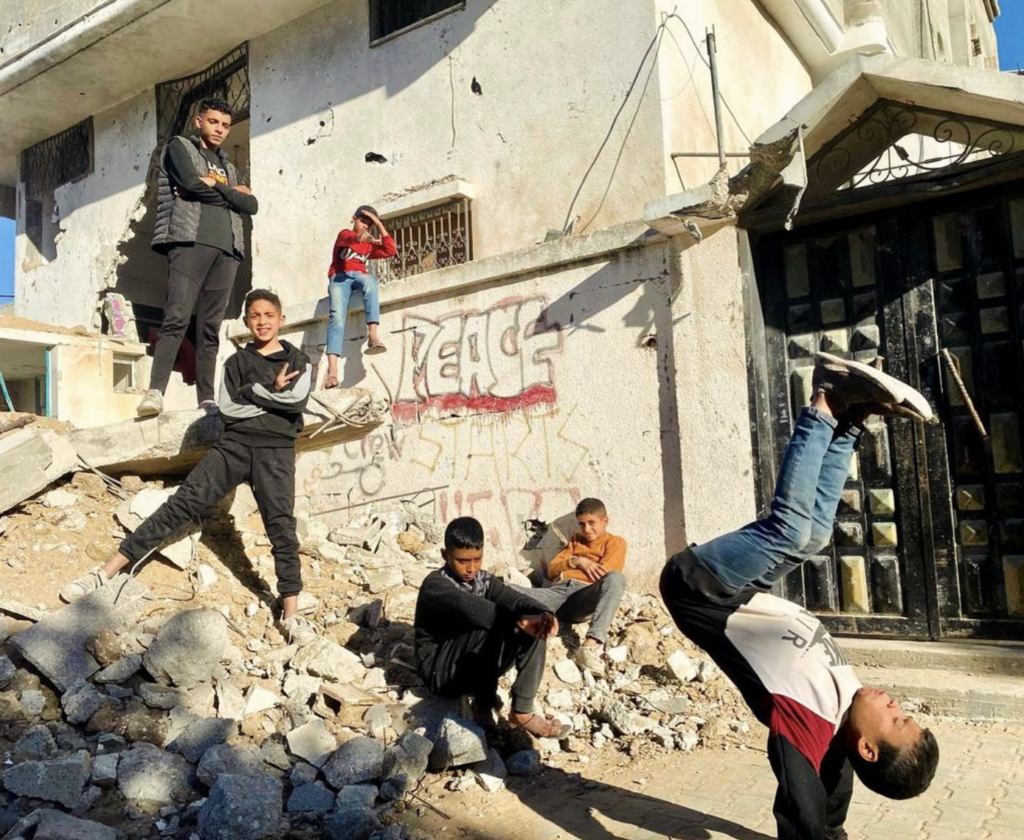
Camps Breakerz students dance atop the remnants of bombed buildings in Gaza.

Some problems seem so deeply rooted and the road to their solutions can feel so long, that it’s daunting to hope. These are precisely the times that Huey P. Newton was referring to when he advised the people to hold strong and remember that there is victory in survival when up against such a force. 

Shark’s final thoughts are humbling when considering the weight of that force that he and his crew are facing. They contain no hate or reference to an enemy. They don’t even center on his own struggle. “Support each other,” he says calmly. “Hip hop is one family and I just want them to stand with humanity. I don’t want them to stand with anything else.” 

If we all stand with humanity, seeking to find unity with the everyday people across all sides of conflicts in our world, the survival of the people of Gaza may just allow them to live to see the clouds part and humans break some of our most dangerous cycles. And with the support of their community, while they survive, they will dance.

206 Zulu 17th Anniversary

0
 
206 Zulu 17th Anniversary Special
Uplift | Preserve | Celebrate
With reflections by Big Zo, Georgio Brown, Malika Patti, Mz Music Girl, Orbitron, Queen Kitty Wu, Shooter in the Town, Supreme La Rock & More!

Saturday, February 13
6pm PST
Livestreaming on Facebook and YouTube

ALSO

Check out the 206 Zulu 17th Anniversary Kick-Off event the night before!

Pangea: Hip Hop Heals
Album Release & Artist Discussion
With guests Dumi Right (USA), Eli Almic (Uruguay), Emile YX? (South Africa), Maze 022 (India), Tati Chaves (Costa Rica), ZDC (Australia) & More!

Friday, February 12
6pm PST
Sign up REGISTER (free)


LINKS
206 Zulu Anniversary Home
Pangea Home
Facebook Event Page

13th & Fir 3D Art – Request for Qualifications

0

3D Art for 13th & Fir 
Request For Qualifications (RFQ)

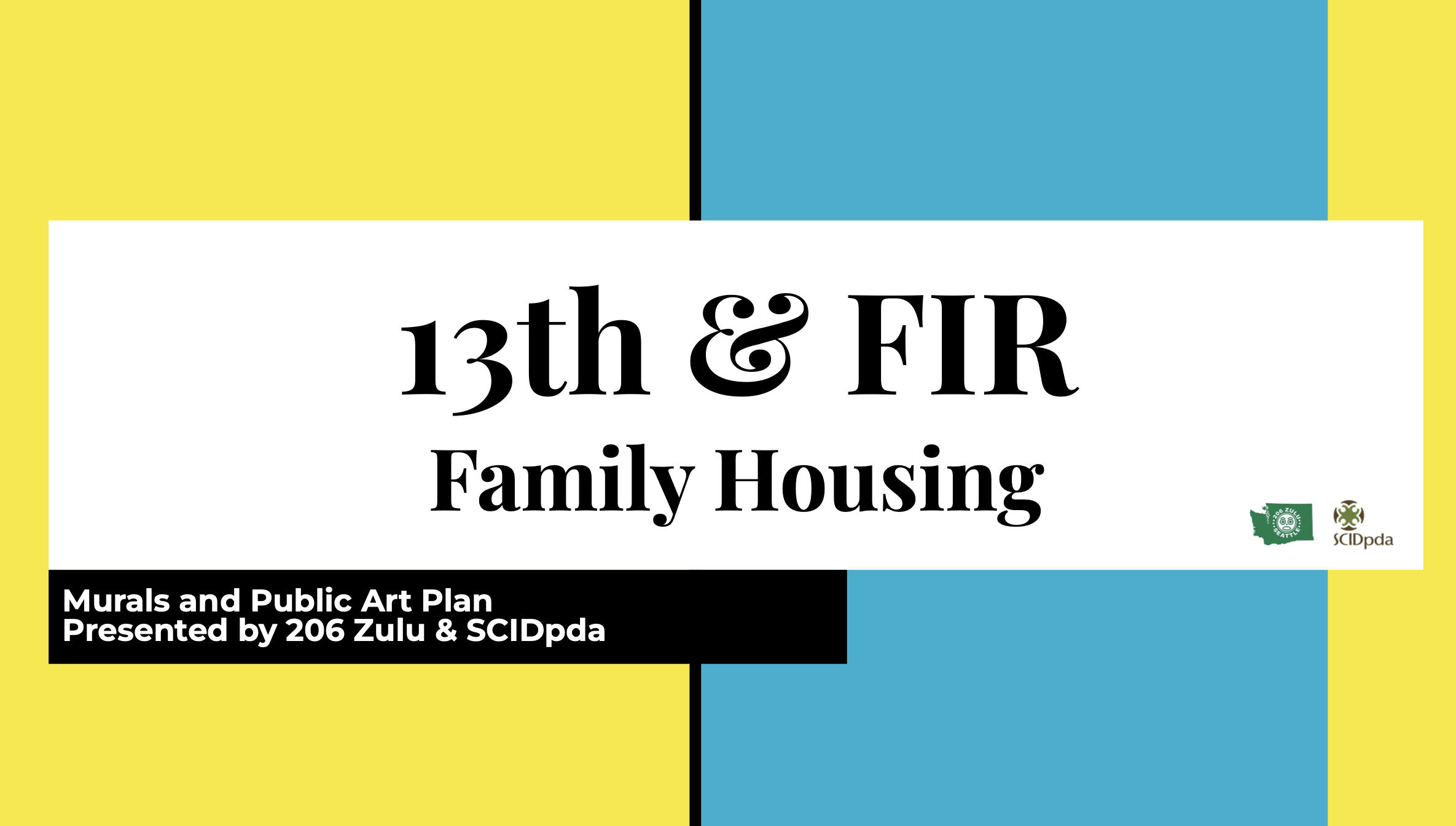
206 Zulu and SCIDpda, two community-based organizations, are seeking 3D artists or artist teams to design, fabricate and install site-specific publicly viewable 3D Art outside of 13th & Fir, a new affordable housing development located in the Central Area in Seattle, Washington. 

ABOUT THE PROJECT 
13th & Fir is a joint venture of two local non-profit affordable housing developers, the Seattle Chinatown International District Preservation and Development Authority (SCIDpda) and Community Roots Housing (CRH). The building is a 6-story mixed use housing project providing space for 156 low-income family-sized apartment units, community-based commercial spaces, and a childcare center.

SCIDpda, who manages the property, is partnering with local arts organization 206 Zulu to facilitate the installation of 3D Art at 13th & Fir. For over a decade, 206 Zulu has been hosting their annual Off the Wall event, a one-of-a-kind annual graffiti art competition and community festival that spotlights the local and international talent from the aerosol art community, at the old King County records building (the current site of 13th & Fir).

This project is a unique opportunity to continue the legacy of art at a building designed to help our low-income families live and stay in Seattle. The goal for this project is to create large-scale art at an affordable housing building, 13th & Fir, that is impactful and reflective of the immediate neighborhoods’ collective values and diverse community.
 

PROJECT SCOPE 
The artist or artist team will be contracted to develop site-specific, publicly viewable 3D Art informed by meaningful engagement with the 13th & Fir residential community. The artist will work collaboratively with 206 Zulu, SCIDpda, 13th & Fir staff, and community stakeholders through the project. 

The scope of work includes:

  • Community engagement
    Work with 206 Zulu and SCIDpda staff to plan and implement two (2) community engagement events. Integrate feedback and community-driven ideas into the development of the design. 
  • Location Assessment and Selection
    Determine location and specific kind of installation based on expertise and feedback from community engagement. Consider visibility, materiality, accessibility, and overall impact in exact location selection. Exact location feasibility will be determined in consultation with SCIDpda and the building architect. 
  • Concept Development
    Create a 3D art design that reflects community engagement and site-specific context. The quality of art should align with the needs of the project site to maintain durability, with special care to ensure it is weather-proof and kid-proof within reason. The artist/artist team will work with 206 Zulu and SCIDpda for design review and approval, including budget approval. 
  • Fabrication and Installation
    The artist/artist team is responsible for the fabrication of their final design or will need to work with a subcontractor who will carry out fabrication and installation. The artist/artist team will need to provide a detailed installation plan to SCIDpda and 13th & Fir staff. Artwork should be safe, durable, and maintainable. SCIDpda will assist with coordinating installation details. 

ART PLAN 
In the winter and spring of 2022, 206 Zulu and SCIDpda facilitated meetings with an Art Advisory Committee (AAC) to create an art plan for 13th & Fir. The art plan is a document that establishes the foundation for the art selection process, art themes, location priorities, and community engagement process. A number of community-based organizations and other community partners are represented on the AAC, including Bailey Gatzert Elementary, Seattle University, Norman Mitchell Manor, Urban League of Metropolitan Seattle, Mithun, Friends of Little Saigon, Seattle Housing Authority, Community Roots Housing, and Denise Louie Education Center. We highly encourage all interested artists/artist teams to review the Art Plan to gain a better understanding of the values and goals of this project. The Art Plan can be viewed here. 

 
FUNDING 
This project is funded through a grant from the Seattle Office of Planning & Community Development (OPCD) through the Equitable Development Initiative (EDI) Program. See “PROJECT BUDGET” for further detail and payment schedule.

LOCATION 
The building is located at 1215 East Fir Street, at the intersection of Yesler Terrace, the Central District, and Chinatown International District. This Request for Qualifications is looking for artists/artist teams who will focus on external 3D Art locations. The building has multiple options for installation locations, including many that are visible to the Yesler Street traffic, Seattle Streetcar, Bailey Gatzert Elementary, and Washington Hall. Please see below photos of exterior 13th & Fir to understand the space. 

Please note that art cannot be affixed to the fiber cement panels (white panels)brick walls, or awnings on the exterior of the building. Any projects on the sidewalk are possible with receipt of additional approval from the Seattle Department of Transportation (SDOT) due to the right of way. Items like benches, bike racks, etc are possible and will need to meet appropriate codes. Additional technical details and feasibility scoping can be completed in consultation with SCIDpda and the building architect.

13th & Fir currently features murals in five (5) locations on the exterior of the building. Photos of these murals can be viewed hereTwo (2) additional murals will be installed on the West facade in Summer 2026. 

Southeast Corner of 13th & Fir (Community Room on Ground Level)

Front Entrance of 13th & Fir (East Façade) 


Northeast Corner of 13th & Fir (Denise Louie Education Center Childcare Center on Ground Level) 


13th & Fir Courtyard (West Façade) 


13th & Fir Courtyard (West Façade) 

Childcare Area in 13th & Fir Courtyard (West Façade) 

COMMUNITY ENGAGEMENT 
Artists will participate in two (2) in-person community forums to collect community feedback and inform the 3D Art designs. These community forums will engage residents of 13th & Fir and the surrounding community.

During the forums, artists will
(1) present previous work to showcase their art style
(2) familiarize themselves with the community members and their perspectives on art at 13 & Fir
(3) be prepared to discuss themes and ideas with attendees to collaboratively build the design with the community.

Design proposals will be built after community engagement is completed and should incorporate feedback from engagement events.

Forums will be scheduled between Late May – Early June 2026, based on artist availability. To engage the greatest number of community members, we will schedule one forum on a weekday evening and one forum on a weekend afternoon.

ARTIST SELECTION PROCESS

Phase 1: Request for Qualifications. Artist and artist teams are invited to submit their qualifications for consideration. A detailed list of required submission materials is listed below under “RFQ SUBMISSION MATERIALS.” All submissions must be made by Wednesday, April 15, 2026 at 5:00 PM PST via email to 206zulu@gmail.com.

PROJECT TIMELINE – 2025

March 5, 2026 

Request for Qualifications issued 

March 18, 2026 

Optional virtual office hours on Wednesday, March 18 from 2-3 PM PT. Artists will be able to ask questions and discuss the project with the SCIDpda project manager and Office of Arts & Culture staff. The office hours can be joined via this link 

Please reach out to Naomi Saito (naomis@scidpda.org) for additional details on this session. 

April 15, 2026 

Request for Qualifications due at 5:00 PM PST 

April 2026 

Applications reviewed and finalists are selected for interviews 

May 2026

Interviews completed with finalists 

May 2026 

Selected artist contacted and contract initiated 

Mid-Summer 2026 

Artists will participate in 2 community forums to collect community feedback to inform design 

August 2026 

Draft proposal review and feedback 

September 2026 

Final proposal reviewed and approved 

Fall 2026 

3D Art development, coordination, and installation.  

Late Fall 2026 

3D Art reveal and community celebration 

* Exact project timeline can be adjusted to meet project needs

PROJECT BUDGET 

Description 

Amount 

Details 

Artist Design Fee 

$18,300 

Fee is inclusive of all prep and design time, meeting with planning team, attendance at engagement events, travel, and artist labor. 


3D Art Artist Budget 


$73,000 


Budget includes all 3D art implementation costs including fabrication, installation, labor, etc. Amount is inclusive of all taxes and fees. 

PAYMENT SCHEDULE 
Payments will be made directly to the artist using the following schedule: 

  • $9,150 will be paid upon full execution of contract  
  • $9,150 will be paid after completion of community engagement events 
  • $30,000 will be paid for approval of final draft  
  • $30,000 will be paid for the approval of the detailed installation plan 
  • $13,000 will be paid for completion of 3D Art 

RFQ SUBMISSION MATERIALS 
Please send a proposal to 206zulu@gmail.com addressing the following: 

  1. Current CV/resume. Teams must submit one resume/CV per team member. 
  2. Cover Letter or Letter of Interest and Approach limited to one page. Applicants should briefly describe their interest in the project, approach to community-based art, personal connection to the Central District/CID community, and a description of your creative vision for the project and how it connects and aligns with community values and themes in the Art Plan. 
  3. Portfolio showcasing 3-5 previously completed 3D Art projects that demonstrates an ability to design, create, and install outdoor 3D Art. For each project include:
    • The name of the project
    • Artist name(s) 
    • Location 
    • Total length of project and date completed 
    • Medium and size details 
    • Project budget (where applicable) 
    • 2-3 photos showing distinctive views of each piece, including one wide shot and one detail shot of each artwork  
    • 100-word or less description of the project and how it relates to this 3D Art RFQ (e.g. is a public art piece, a 3D Art project, a piece designed with a neighborhood or community organization, etc)
  4. Three (3) professional references. Please include name, title, affiliation, phone number and email address. 
  5. Submission Format: Responses shall be submitted as a single PDF file. 
  6. Submit proposal via email to 206zulu@gmail.com. 
  7. Additional Materials: Artists may include up to five (5) selections of support materials (links) such as reviews, news articles, and other related information. 
  8. Deadline: April 15, 2026 by 5:00 PM PST. 

ELIGIBILITY 
Artists who are over the age of 18 and located within the United States are eligible to submit their interest and qualifications. Students are not eligible to apply. BIPOC artists with personal ties to the neighborhood and Seattle are highly encouraged to apply. Artists must be available for in-person community engagement events as outlined on the project timeline. Ability to attend 3D Art unveiling event preferred but not required. Artists who have a strong professional profile, experience in producing public 3D Art and/or have successfully worked on collaborative projects of this scale are encouraged to apply. Artist teams may also apply. Artists must be able to adhere to the project timeline. 

Please note, designs may not include AI-generated imagery or content created using generative AI platforms. Standard design software tools (e.g., Adobe Illustrator, Photoshop) may be used; However, the conceptual artwork and visual elements must be created by the artist 

RFQ SELECTION CRITERIA 
Submissions will be scored on the following, with a maximum score of 100 points: 

  • Artistic Excellence (30 points): The artist’s work reflects artistic excellence, innovation, and originality as evidenced by quality of craftsmanship and mastery of skills and techniques; demonstrates professional approaches to processes and presentations; and/or communicates a unique vision or perspective 
  • Professional Experience (25 points): The artist’s professional experience is adequate to meet the demands of the project, including a proven ability to meet project budgets, deadlines, and to perform work in a timely and professional manner. Public art experience is required. 
  • Experience working on a project of similar scale (30 points): Previous work that can specifically demonstrate the successful completion of projects that include partnering with stakeholders for the purpose of creating public 3D art of this size, scale, and budget requirements. 
  • Values and Theme (15 points): How aligned is the artist’s proposal and personal outlook reflected in the community values and ability to incorporate the themes and ideas presented. 

SUBMISSION DEADLINE 
All materials must be received by 5:00 PM PST on April 15, 2026. Incomplete or late submissions will not be considered. 

About SCIDpda: The Seattle Chinatown International District Preservation and Development Authority (SCIDpda) is a community development organization whose mission is to preserve, promote, and develop the Seattle Chinatown International District (CID) as a vibrant community and unique ethnic neighborhood. We have over a 45-year success record of increasing neighborhood sustainability through innovative programs and projects that balance development and preservation. 

About 206 Zulu: A non-profit organization based in Washington Hall dedicated to providing accessible spaces while serving communities through the upliftment, preservation, and celebration of Hip Hop culture. 

Learn American Sign Language

0

✨ Upcoming Class Alert! ✨
We’re so excited to announce a 6-week ASL class at Washington Hall—taught by a Deaf instructor! 🙌

📅 Starts: April 22, 2026. 6-7 pm
📍 Location: Washington Hall – 153 14th Ave, at Fir St.
⏳ Duration: 6 weeks

This is the perfect opportunity to learn, connect, and grow in the ASL community. Don’t miss it!

👉 Register now and start your journey.
REGISTER

Presented by Visually Speaking

Honoring Nasty Nes: Rap Attack Lives Vol. 1

0

April 25, 2026
Honoring Nasty Nes: Rap Attack Lives Vol. 1

More info TBA!!

Washington Hall
153 14th Ave
Seattle, WA 998108

7-10 PM | All-Ages | Free

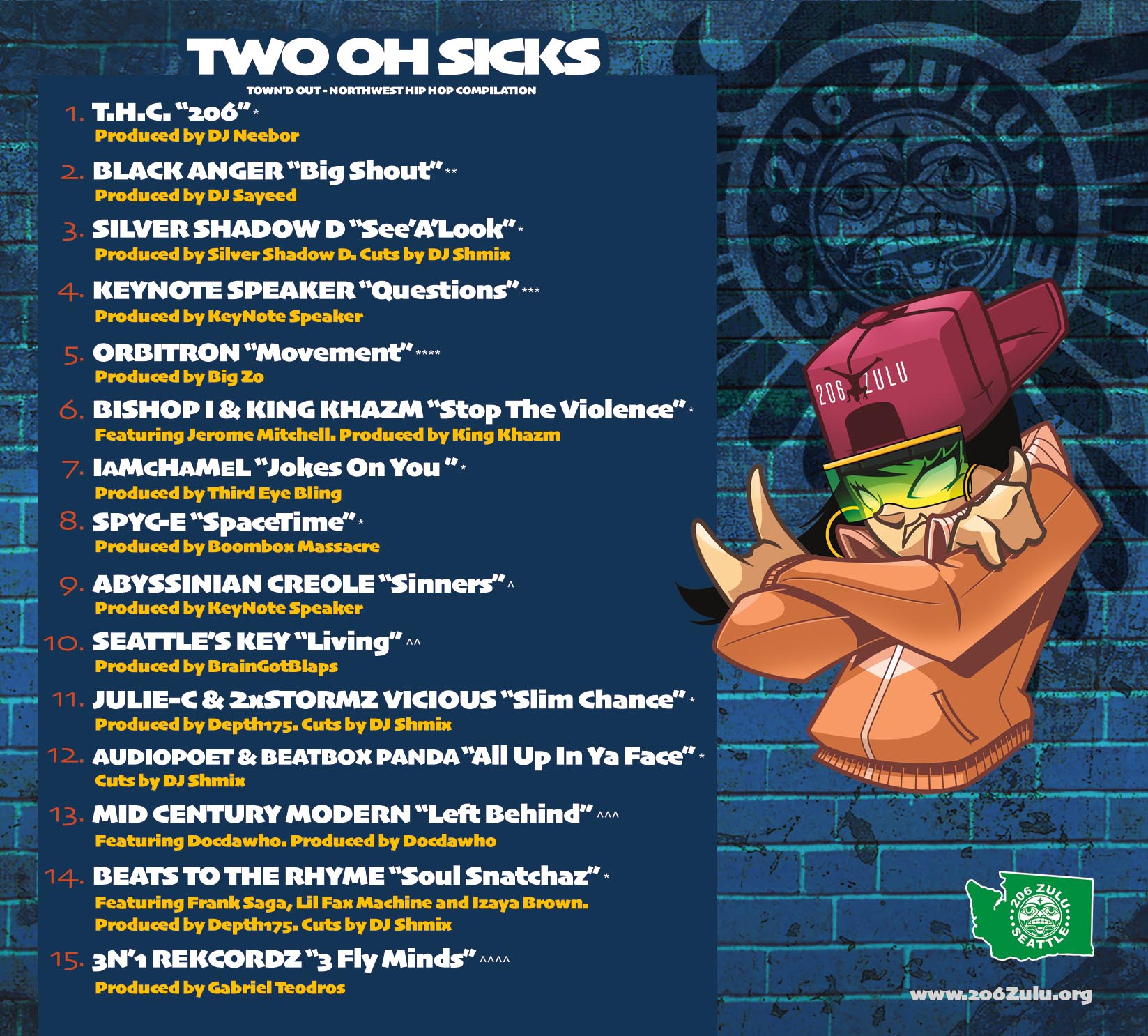
206 Zulu – Two-Oh-Sicks: Town’d Out – NW Hip Hop Compilation

0

  1. T.H.C. “206” *
    Produced by DJ Neebor
  2. Black Anger “Big Shout” ** 
    Produced by DJ Sayeed
  3. Silver Shadow D “See’A’Look” *
    Produced by Silver Shadow D. Cuts by DJ Shmix
  4. KeyNote Speaker “Questions” ***
    Produced by KeyNote Speaker
  5. Orbitron “Movement” ****
    Produced by Big Zo
  6. Bishop I & King Khazm “Stop The Violence” *
    Featuring Jerome Mitchell. Produced by King Khazm
  7. IaMcHaMeL “Jokes On You” *
    Produced by Third Eye Bling
  8. Spyc-E “SpaceTime” *
    Produced by Boombox Massacre
  9. Abyssinian Creole “Sinners” ^
    Produced by KeyNote Speaker
  10. Seattle’s Key “Living” ^^
    Produced by BrainGotBlaps
  11. Julie-C & 2XStormz Vicious “Slim Chance” *
    Produced by Depth175. Cuts by DJ Shmix
  12. AudioPoet & Beatbox Panda “All Up In Ya Face” *
    Cuts by DJ Shmix
  13. Mid Century Modern “Left Behind” ^^^
    Featuring Docawhoo. Produced by Docdawhoo
  14. Beats to the Rhyme “Soul Snatchaz” *
    Featuring Frank Saga, Lil Fax Machine & Izaya Brown. Produced by Depth175. Cuts by DJ Shmix.
  15. 3N’1Rekcordz “3 Fly Minds” ^^^^
    Produced by Gabriel Teodros

* Recorded by Robbin Clemente at Emerald Street Studios.  ** Recorded and mixed by DJ Sayeed at The Temple.  *** Recorded by Dume41, mixed by KeyNote Speaker.  **** Recorded and mixed by Alonzo Ybarra at Beacon Skillz.  ^ Recorded by Abyssinian Creole, mixed by KeyNote Speaker and Dume41. ^^ Recorded by Keyuntae Ward. ^^^ Recorded by King Khazm at The MAD Lab. ^^^^ Recorded by Chris Dean at Boomhouse Studios. All songs mixed and mastered by Dume41 unless noted. Art by Spen1. Layout by King Khazm.

LISTEN ON
Amazon Music
Apple Music
Deezer
Spotify
YouTube

Black Anger – Big Shout (Official Video)

0

Black Anger “Big Shout”. Produced by DJ Sayeed. Directed and filmed by Visions Filmworks. Edited by King Khazm.

From the album “Two-Oh-Sicks: Town’d Out – Northwest Hip Hop Compilation” via 206 Zulu! Available at the following:
Amazon Music
Apple Music
Deezer
Spotify
YouTube

RELATED LINKS
Instagram
OurStory: Legacy of NW Hip Hop: Black Anger
OurStory: Kindu Shabazz
South Seattle Emerald: After 30 Years, Black Anger Returns on Seattle Hip-Hop Compilation

206 Zulu 22nd Anniversary / Two Oh Sicks Album Release Party

0

206 Zulu would like to extend a heartfelt thank you to everyone who participated in the 22nd Anniversary celebration last weekend at Washington Hall! The Two-Oh-Sicks: Town’d Out Northwest Hip Hop Compilation album is now available on 12”, CD and popular streaming platforms!


Friday, February 20, 2026

Join us at Washington Hall to celebrate the 22nd anniversary of 206 Zulu! It’s going to be a night full of good vibes, fresh beats, and the exclusive release of the Two Oh Sicks compilation album. Don’t miss out on the party where music and memories collide. Come ready to dance, connect, and get Town’d Out!

Featuring:
2xStormz Vicious & Julie-C, 3N’1 Rekcordz, Abyssinian Creole, AudioPoet, Beatbox Panda, Bishop I, IaMcHaMeL, Jerome Mitchell, KeyNote Speaker, Mid Century Modern, Seattle’s Key, Silver Shadow D, Spyc-E, T.H.C. and DJ Topspin aka Blendiana Jones!

About 206 Zulu:
206 Zulu a non-profit organization dedicated to providing accessible spaces while serving communities through the upliftment, preservation, and celebration of Hip Hop culture.

Washington Hall
153 14th Ave, Seattle, WA 98122
7:30pm | $15 Adv. / $22 DOS 

Ticket Link
Facebook Event Page

Sammy Obeid: In Love with Seattle!

0
Due to popular demand Comedian Sammy Obeid (Netflix, Conan) performs LIVE again in Seattle on February 14, 1:00pm at Washington Hall.

💙 Sammy Obeid: In Love with Seattle! 💙
February 14, 2026 | 1:00 PM | Washington Hall

Fresh off sold-out shows around the world, comedian Sammy Obeid returns to Seattle for a special Valentine’s Day afternoon performance.

With his signature blend of cultural observation, math-inspired wit, and hilarious storytelling, Sammy delivers punchlines that will have you laughing long after the show is over. This is an afternoon meant to be shared. Make it part of your Valentine’s plans and enjoy world-class comedy in one of Seattle’s most iconic venues.

Doors 12:00 pm | Show 1:00 pm

Lebanese-Palestinian American, born in Oakland, California, Sammy Obeid double majored in Business and Mathematics at UC Berkeley and then turned down a job at Google to be a comedian. Now the host of 100 Humans on Netflix, he’s also appeared on NBC’s Last Comic Standing and America’s Got Talent, as well as TBS’s Conan, and is best known for his world record of performing comedy 1,001 nights in a row, a story featured in both Time Magazine and The New York Times.

15th Annual Beat Masters

0

206 Zulu presents:
The 15th Annual Beat Masters Beat Battle

Stay tuned for date and announcements coming soon!


LINKS
Beat Masters Home
Facebook Event Page

Honoring the Life and Legacy of P.E.A.C.E.

The Hip Hop community is mourning the passing of Mtulazaji “P.E.A.C.E.” Davis, a visionary emcee, cultural craftsman, and founding force within the legendary Freestyle Fellowship and Project Blowed movements. Known for his lyrics, voice, and cadence—all charged with dynamism—P.E.A.C.E. moved fluidly between rapid-fire bursts and a smooth Texas drawl, always laced with unmistakable California cool. A fearless improviser and one-man theater of rhyme, he fused mind-bending wordplay with sharp lyricism, often steeped in burn-yo’-shit-down sentimentality. P.E.A.C.E. was a cornerstone of L.A.’s underground, a scene that helped reframe the narrative of West Coast Hip Hop.

More than an emcee, P.E.A.C.E. was a griot: a truth-teller and cultural guardian who used rhythm and rhyme to document history, reflect his reality, and pass knowledge to those coming next. He transitioned on October 24, 2025, at the age of 51, leaving behind a powerful body of work and a legacy that continues to inspire lyricists, and freestylers worldwide. The outpouring of respect and reverence across the Hip Hop community speaks to the depth of his impact.

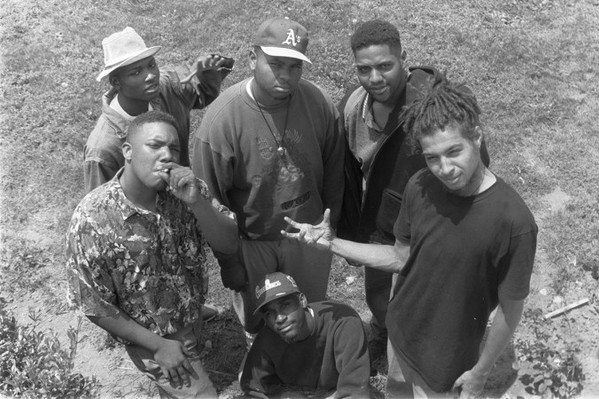
P.E.A.C.E. rose from the fertile creative soil of South Central Los Angeles, where Hip Hop wasn’t just entertainment—it was a lifeline. In the early ’90s, while commercial radio flooded the airwaves with G-flows, a different current emerged from the Good Life Café, a modest health food store turned open-mic sanctuary. There, young emcees like P.E.A.C.E. reimagined the art form, not by denying the raw truths of their environment, but by elevating the tools used to express them.

The Good Life stage with the founder & owner, Janie Mae Scott aka IfaSade (center)

The Good Life became an arena for artistic innovation, giving rise to a wave of forward-thinking artists and groups, including Medusa, Of Mexican Descent, Abstract Tribe Unique, Volume 10, The Nonce, Chillin Villain Empire, the Grammy-nominated Skee-Lo, and young members of the Atban Klann, who would later evolve into the Black Eyed Peas. A strict no-cursing policy and high standards for originality pushed artists to sharpen their craft and raise the lyrical bar, leaving an imprint that continues to shape underground scenes today.

This cultural moment is powerfully captured in This Is the Life (2008), a documentary written and directed by Ava DuVernay, herself a former Good Life regular. The film chronicles the brilliance, community, and creative rigor of that era. It was more than a venue—it was a workshop, a proving ground, and a living archive of Black innovation and resistance. For P.E.A.C.E.’s musical genius, it was a perfect home.

As a founding member of Freestyle Fellowship, alongside Aceyalone, Myka 9, and Self Jupiter, P.E.A.C.E. helped redefine the possibilities of Hip Hop. Their landmark debut, To Whom It May Concern… (1991), recently Grammy-nominated for its reissue, was self-released, uncompromising, and urgent. It was a declaration of artistic independence. In addition to the four emcees most often credited, key contributors like J. Sumbi and M.D. Himself helped shape the sound and ethos of the group. All were forged at the Good Life Café and later became pillars of the Project Blowed movement.

Freestyle Fellowship

Freestyle Fellowship’s follow-up, Innercity Griots (1993), is widely hailed as one of the greatest underground Hip Hop albums of all time. With polyrhythmic flows, layered narratives, black empowerment and spiritual depth, it offered a blueprint for generations of emcees searching for something more profound than surface-level storytelling.

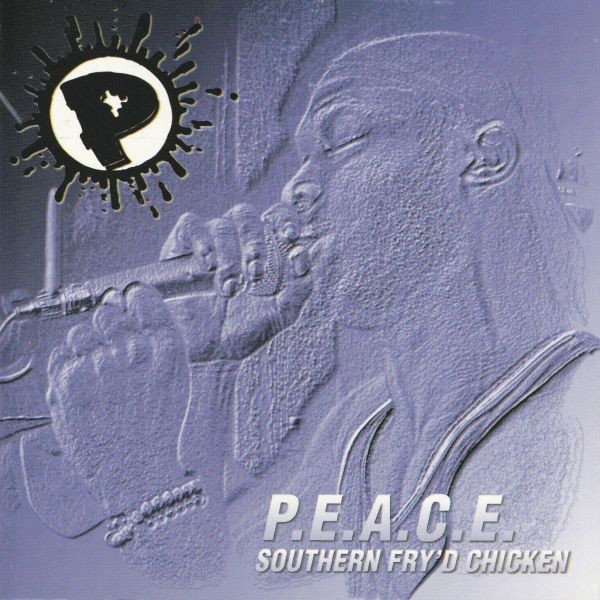
While his work with Fellowship was foundational, P.E.A.C.E. also carved out a lane entirely his own. His 2000 debut Southern Fry’d Chicken captured the raw spontaneity of his live presence—humorous, densely packed, and rhythmically complex. He followed with Megabite in 2004, a deeper dive into abstraction and introspection. Though not widely known in the mainstream, both albums are respected in underground circles for their originality and fearlessness. They were not made for easy listening, and that was never the point. P.E.A.C.E. wasn’t about convenience. He was about exploration.

Album art from Southern Fly’d Chicken (released 2000)

He stood out for his voice—both literal and artistic. His verses bent time, language, and expectation, delivered with sharp humor, a jazz musician’s ear, and a poet’s command of phrasing. His flow was shape-shifting and unpredictable, yet always in control.

What truly set P.E.A.C.E. apart was his presence; his technical skills. His ability to stack syllables, flip cadences, and pivot mid-bar was legendary. But it was how he embodied the moment that made him unforgettable. When he stepped into a cipher, he didn’t just rhyme. He opened a channel. His freestyles were more than routines. They were rituals—acts of communion between rhythm, breath, and divine timing. 

To witness P.E.A.C.E. rhyme was to see someone channel the unknown, summoning bars from the ether with the ease others draw breath. He freestyled with tone, gesture, and energy as much as with words. His performance was a kind of intense meditation, a surrender to the now. Even if you never met him, the lesson was clear—in every grainy video, battle tape, or bootleg freestyle. He taught through presence, courage, and craft.

He wasn’t just a rapper. He was a messenger of vocal style. A cultural artisan grounded in values that birthed Hip Hop: truth, expression, community, resistance, joy, and discipline. He thought differently, moved differently, rapped differently. He never watered down his vision for mass appeal. He never chased industry relevance. And yet, his presence echoed in ciphers around the world. In every spontaneous verse where language is honored over volume and soul outweighs trend, his influence lives on.

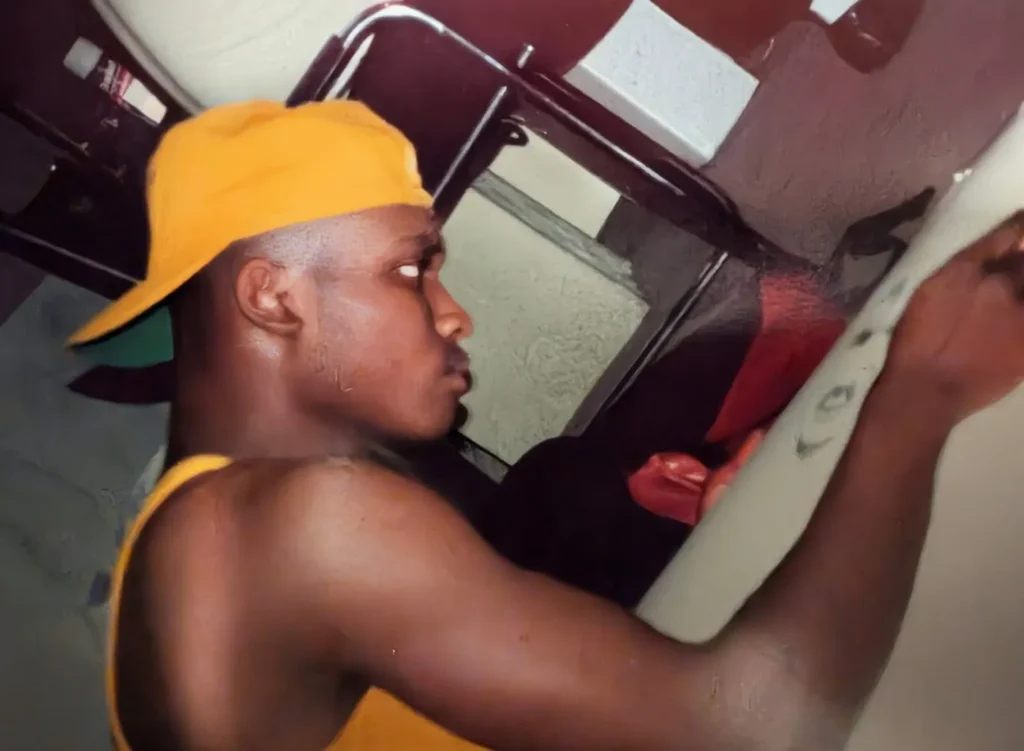
P.E.A.C.E. taking a break to draw while in the studio recording Innercity Griots, Photo by Ola Kennedy (O-Roc), 1992.

In just 51 years, P.E.A.C.E. came through, broke ground, and transcended, leaving behind an impeccable body of work and a constellation of song features and freestyle cipher memories. Without question, we’ll be digging back through archives, dusty tapes, and scattered uploads, still chasing the rhyme lessons he left behind.

But we can no longer catch this Master of Ceremonies live. With that mischievous grin you can hear in his recordings, P.E.A.C.E. mockingly reminds us: “You’re out of time — I’m already gone… Already.”

In the spirit of 206 Zulu and our mission to uplift the artists and architects who shaped this culture, honoring those who stood in the cipher—today, we remember P.E.A.C.E.

Rest easy, emcee.

You can donate to support P.E.A.C.E.’s family here.


An epilogue: Mic Still Warm

For me, and for many, one of P.E.A.C.E.’s most unforgettable public moments came at Scribble Jam 1999, then one of the most respected freestyle battle tournaments in the country. That year, he faced off against two formidable emcees: Dose One and later Eyedea, in battles that would become etched into the collective memory of freestyle heads everywhere. Eyedea ultimately took the crown, but everyone knew the most dynamic clashes happened on the road to the top.

That’s where two future friends, P.E.A.C.E. and Dose One, went head-to-head. Here’s the play-by-play:

The crowd? Electric.
The DJ drops the needle on Gang Starr’s “Full Clip.”
The stage? Set.

In his battle against Dose One, P.E.A.C.E. put his full mastery on display: the lyricism, the theater, the good medicine. Those who’ve witnessed his freestyles often say he had a way of ramping up — strategically, intentionally — envisioning the end of the verse before the first bar even dropped.

And from the jump, his strategy was clear.

Knowing Dose One was a fan of West Coast underground, P.E.A.C.E. threw the first jab:

“…You’re not Busdriver…”

Invoking one of Project Blowed’s fastest and most unorthodox emcees.

He planted the seed. Then closed his round with a smirking challenge:

“You been standing up here, doing what you done did, all this first round rap… (pause) it ain’t shit. I’ma save mine for later, just to explode — so come with that old fast rap so I can take it out of control.”

Dose One took the bait.

Matching pace for pace, he dove straight into P.E.A.C.E.’s terrain — rapid, intricate, breathless.
At the time, Dose was riding high with the Anticon collective — a crew known for eating emcees in battles and redefining the edges of experimental Hip Hop. He held his ground, then capped his verse with a theatrical jab:

“…kiss my ass.”

But by then, it was clear:
P.E.A.C.E. wasn’t just battling — he was tracking Dose One.
Setting tempo. Laying traps. Commanding the energy.
He wasn’t just in the cipher.
He was holding the fire.

His second round?
Part comedy. Part commentary. Part performance art.
Rhyming at near-incomprehensible speed, he absorbed Dose’s energy and flipped it — then dropped this line:

“Listen to me man, I can do it on American Bandstand, I can do it without a band, I can do it without a mic in my hand…”

And then —
He threw down  the mic. Rapping loudly so the audience could hear:

“…and I can still keep rapping, and keep fucking you up.”

The crowd erupted.

He picked the mic back up without missing a beat. Still rhyming.
A few bars later, he pointed into the crowd and told Dose One he belonged.

“I don’t think so…(inaudible) …  the birds in the trees…”
“…leave you lying on your back  like this G!”

And then —
Boom.
P.E.A.C.E. dips flat onto his back.
Arms and legs sprawled and lifeless.
The room exploded.

Dose One’s face said it all — part disbelief, part joy.
He knew he was in the presence of something rare.

And then — P.E.A.C.E. got up.
Dusted himself off.
Mic steady.
Rhyme unbroken.

It was a masterclass
in timing,
vulnerability,
and command.

Irreverent.
Instinctive.
Alive.

He showed us
what it looks like
when irreverent art
and spirit
meet onstage.

Now, in the light of his passing,
that moment feels transformed.
What once felt like performance
now reads like poetry.

A metaphor for life.

The mic drops.
The body falls.
And yet —
the flow continues.

That moment
was a kind of surrender.

A reminder
that sometimes,
not even a microphone
can hold the weight
of what we carry.

P.E.A.C.E. gave his whole body
to the moment —
and kept flowing
to the next world.

Respect.


Sources:

  1. ComplexHip-Hop Legend P.E.A.C.E. of Freestyle Fellowship Passes Away
    https://www.complex.com/music/a/markelibert/hip-hop-legend-peace-of-freestyle-fellowship-passes-away
  2. HipHopWiredHip-Hop Mourns Passing of Freestyle Fellowship’s P.E.A.C.E.
    https://hiphopwired.com/playlist/hip-hop-mourns-passing-freestyle-fellowship-p-e-a-c-e/
  3. HotNewHipHopP.E.A.C.E. of Freestyle Fellowship Passes Away
    https://www.hotnewhiphop.com/955035-peace-freestyle-fellowship-passes-away-hip-hop-news
  4. NewsBreak / Complex SyndicationHip-Hop Legend P.E.A.C.E. Dead, Group Confirms
    https://www.newsbreak.com/complex-312611388/4315572179557-hip-hop-legend-p-e-a-c-e-of-freestyle-fellowship-dead-group-confirms
  5. Yahoo! News (UK)Hip-Hop Legend P.E.A.C.E. Has Died
    https://uk.news.yahoo.com/hip-hop-legend-p-e-223445690.html
  6. Lipstick Alley Discussion Thread – Community responses to the announcement
    https://www.lipstickalley.com/threads/hip-hop-legend-p-e-a-c-e-of-freestyle-fellowship-dead-group-confirms.6010647/
  7. MSN MusicHip-Hop Legend P.E.A.C.E. Dead, Group Confirms
    https://www.msn.com/en-us/music/news/hip-hop-legend-peace-of-freestyle-fellowship-dead-group-confirms/ar-AA1Pf5f9
  8. Suggest.com’90s Rap Favorite Has Died: Group Announces Death of P.E.A.C.E.
    https://www.suggest.com/a-90s-rap-favorite-has-died-group-announces-death-of-p-e-a-c-e/2903199/
  9. Tribune Content Agency – Syndicated obituary
    https://rss.tribunecontentagency.com/websvc-bin/rss_story_read.cgi?resid=202510271834TMS_____COVMEDIA_article_1692861_0_20251027
  10. PitchforkFreestyle Fellowship Rapper P.E.A.C.E. Has Died
    https://pitchfork.com/news/freestyle-fellowship-rapper-peace-has-died/
  11. AllHipHopHip-Hop Mourns Freestyle Fellowship Rapper P.E.A.C.E.
    https://allhiphop.com/news/hip-hop-mourns-freestyle-fellowship-rapper-p-e-a-c-e/
  12. Siccness.netP.E.A.C.E. of Freestyle Fellowship Has Passed Away
    https://www.siccness.net/wp/p-e-a-c-e-of-freestyle-fellowship-has-passed-away
  13. iNews ZoombanglaFreestyle Fellowship Co-Founder P.E.A.C.E. Dies, Leaving Legacy in Underground Hip Hop
    https://inews.zoombangla.com/freestyle-fellowship-co-founder-p-e-a-c-e-dies-leaving-legacy-in-underground-hip-hop/
  14. PEACE vs Eyedea (Scribble Jam 1999) – Reddit archive/discussion
    https://www.reddit.com/r/hiphopheads/comments/92w28j/eyedea_vs_peace_scribble_jam_1999/
  15. PEACE vs Dose One (Scribble Jam 1999)
    https://www.youtube.com/watch?v=4FlITr1z_8M&list=RD4FlITr1z_

Bobby Seale Way: All Power to the People

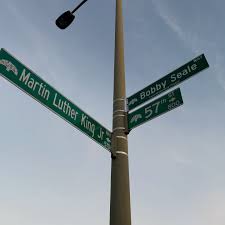
On October 22, 2025, Bobby Seale’s 89th birthday, the City of Oakland renamed the intersection of 57th Street and Martin Luther King Jr. Way to Bobby Seale Way. It’s not just about honoring a legacy. It’s a formal recognition of Seale’s deep impact on the city and his role in helping to build one of the most community-driven movements in modern U.S. history.

Seale, who co-founded the Black Panther Party alongside Huey P. Newton in Oakland, helped develop the Party’s Ten-Point Program, a direct response to the conditions Black people faced in housing, education, employment, healthcare, and policing. But they didn’t stop at diagnosis, they created real-world responses.

While government officials debated how to address poverty, the Panthers got to work. They served thousands of children each week through their Free Breakfast for Children Program, which eventually influenced national school nutrition policies. They opened People’s Free Medical Clinics, where people received healthcare and learned about diseases that disproportionately affected Black communities, like sickle cell anemia—a condition largely ignored by mainstream institutions at the time. They organized clothing drives, childcare, transportation for elders, and legal support. Together, these efforts formed a network of services they called “survival pending revolution.”

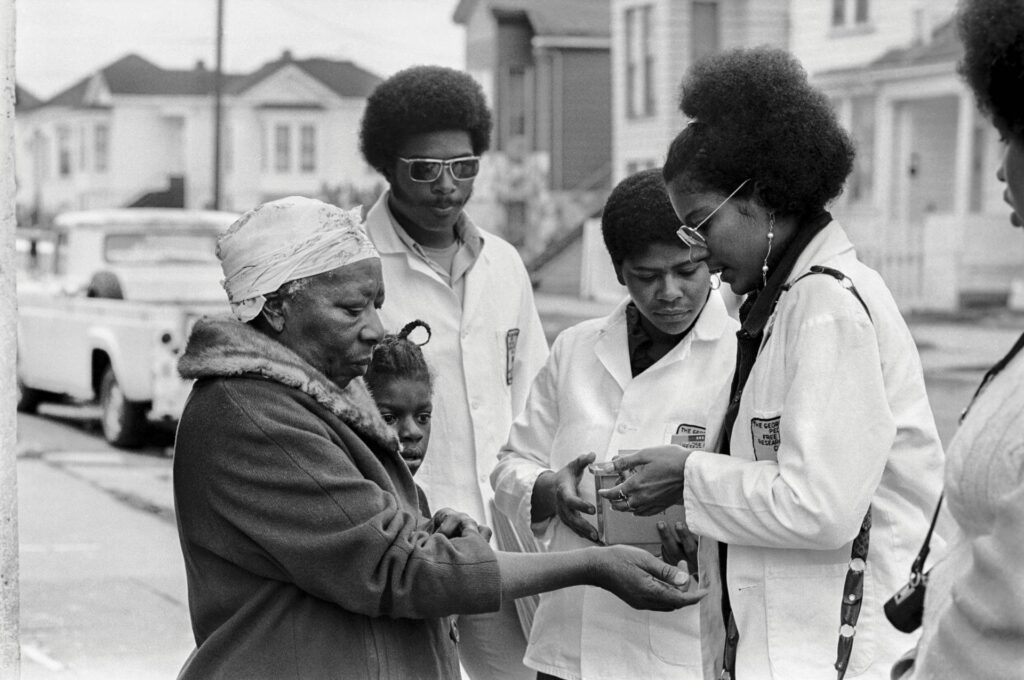
Black Panther Adrienne Humphrey conducts sickle cell anemia testing during Bobby Seale’s campaign for mayor of Oakland in 1973. (Stephen Shames)

Bobby Seale made it clear: “Our job is to teach the people. Our job is to serve the people. We are the people’s revolution.”

That wasn’t just rhetoric. It was a framework—one that made care and political education central to liberation.

The Panthers have often been defined by their image: berets, leather jackets, and their right to self-defense. But what often gets overlooked is how organized, intentional, and service-focused they were. Their actions weren’t just reactive; they were proactive, often outpacing government programs in underserved communities.

They were also pioneers of what would later be called “copwatching,” monitoring police activity in Black neighborhoods and holding law enforcement accountable. Long before smartphones and livestreams, they showed up with law books, notepads, and a plan to protect. They didn’t come to escalate. They came to intervene when necessary and observe at all times.

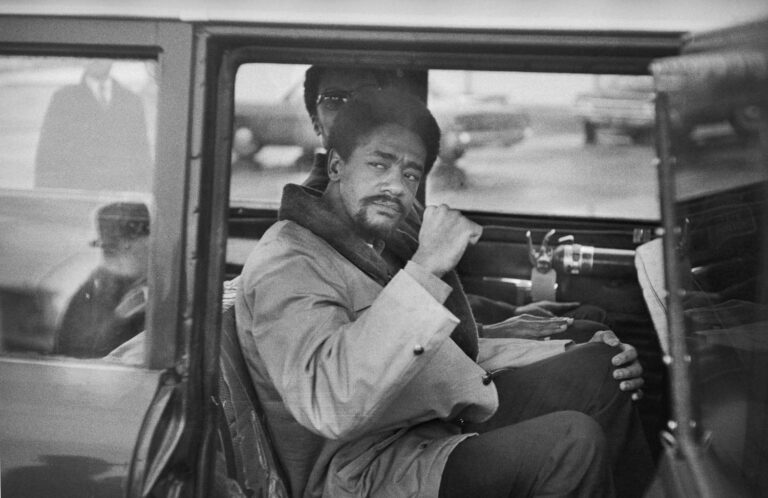
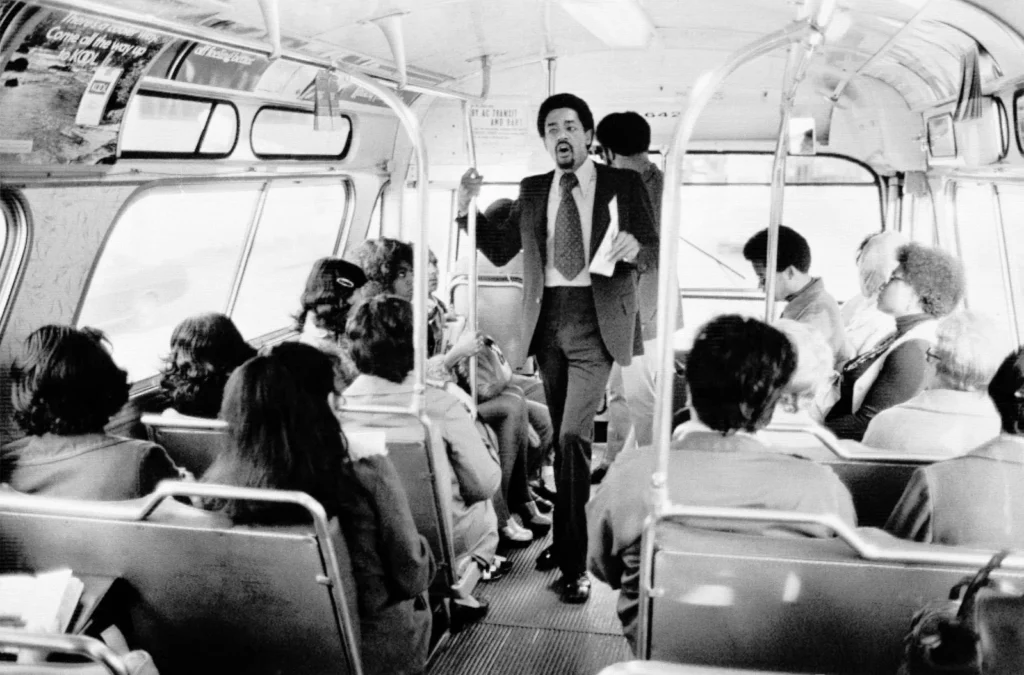
Bobby Seale, chairman of the Black Panther Party, rides a rush hour bus in Oakland, California on April 13, 1973 as he campaigns in his bid to unseat incumbent Mayor John Reading. (AP Photo)

Seale’s politics were never about division. They were rooted in coalition-building. Under his leadership, the Panthers worked alongside Latino, Asian American, Indigenous, and poor white communities. These partnerships laid the foundation for multiracial organizing efforts like the original Rainbow Coalition and sparked international solidarity. While critics often tried to frame him as anti-white, Seale clarified his values: “We don’t hate nobody because of their color. We hate oppression.”

Today, the Black Panther Party no longer operates as it did in the 1960s. Still, its core philosophy continues to shape community action. The legacy shows up in mentorship programs, mutual aid networks, food and health justice initiatives, and youth education projects.

You see this work carried on by groups like the Black Panther Party Alumni Legacy Network, which provides mentoring and education rooted in the Panthers’ original survival programs. The Huey P. Newton Foundation works to preserve and share the Party’s history in Oakland. The East Oakland Collective runs food and resource distribution programs grounded in self-determination and service. Phat Beets Produce pushes food justice through urban farming and community nutrition in areas once served by the Panthers. And the BPP Veterans Mutual Aid Fund supports former Panther members while demonstrating that community care doesn’t end with the headlines; it is ongoing work.

When you see youth in Oakland learning their history and leading food drives, when you see community-run clinics offering care without insurance, when you hear Hip Hop artists reclaiming voice and space, that is Bobby Seale’s legacy—alive and active.

This is why Hip Hop has always resonated with the Panthers’ energy. Not just in aesthetics, but in function. Artists like Public Enemy, Dead Prez, Kendrick Lamar, and Talib Kweli, along with organizations like Hip Hop For Change (Oakland and San Francisco), have taken up the same call: educate, empower, organize, and build.

Few captured that connection more clearly than KRS-One, who in 1995 delivered this line in Ahh Yeah:

“The Black Panther is the Black answer for real / In my spiritual form, I turn into Bobby Seale.”

If the intersection of 57th Street and Martin Luther King Jr. Way had the mic, this would be the lyric describing its own transformation—a line that embraces revolutionary Black history and identity. Bobby Seale Way is more than a marker of geography. It holds memory, movement, and meaning.

Happy Birthday, Bobby Seale. You aren’t just a historical figure; you’re an integral part of the cultural framework that continues to inspire.

All Power to the People.


Sources

Upcoming Events